
Prologue · The colony
Something lives in the dark.
In the darkness of a beehive, thousands of bodies live so close together that something distinct emerges from all those individuals.
A colony.
Wings move the air. Muscles keep the brood warm. The comb holds stores from days when flowers bloomed. Inside the tiny eggs, the next generation begins.
Stand at the entrance and you see bees coming and going. One lands, heavily laden. Another takes off. A brief touch of antennae, then she disappears into the dark. From outside, many of these lives look alike.
Yet one will work until her strength fades. One will lay the future into the cells, egg by egg. One will fly out to pass on his genes, and die at the moment of a successful mating.
Worker. Queen. Drone.
Three bodies. Three paths through life.
One shared life.
What holds a colony together
This story follows the life of the Western honey bee, Apis mellifera. A colony normally includes an egg-laying queen, many thousands of workers and, during the reproductive season, drones. Its size changes over the year. Not every hive contains tens of thousands of bees at all times.
The first-person voices are a storytelling device. They do not describe human intentions or feelings that have been demonstrated in bees. Their cooperation arises through behaviour and biological signals: scents, touch, food exchange and dances.
Biologists speak of a superorganism because division of labour, shared temperature regulation and reproduction are closely interwoven. Each bee remains an organism in its own right. The colony is vulnerable too; its continued survival is never guaranteed.
Read more: The structure of a honey bee colony.
01 · The worker
Before I see
the sky.
A worker, born to serve the colony.
My beginning fits inside a single cell.
A tiny white egg lies there. From it I become a larva, soft and hungry, surrounded by warmth. Again and again, one of my sisters bends over me. She checks me, feeds me, keeps me alive. The world I will one day see is still far away.
Then my cell is sealed. Beneath the wax cap, my body changes. Legs, antennae, wings. About three weeks after the egg was laid, I chew my way into our shared darkness.
I will not grow old. I am needed.
My first 21 days: from egg to worker
All development times given here are counted from the laying of the egg. A worker typically takes around 21 days to emerge. Temperature and other conditions can affect how long it takes.
- Days 0–3 · Egg. The queen normally lays a fertilised egg in a worker cell. After about three days, the larva hatches.
- Around days 3–9 · Larva. Nurse bees feed her glandular secretions. The composition and amount change with her age and eventual caste; older worker larvae also receive components from honey and pollen. This is not an abrupt switch from royal jelly to unprocessed bee bread.
- From around day 9 · Development under the cap. After the cell is sealed, the larva spins a cocoon, then passes through the prepupal and pupal stages. Her body is remodelled into an adult insect.
- Around day 21 · Emergence. The worker opens the cap with her mouthparts. Only now does her life as an adult bee begin.
Sources and context: Brood development and Sources for the story.
The future beneath my antennae
At first, my journeys are short. I clean cells. Where a bee has just grown, a new egg may soon lie. What looks like a small task makes room for another life.
Later, I stand before the open cells myself. The larvae need food. Glands in my head produce brood food. What my sisters gave to me, I now pass on.
A future queen depends on this care too. Her body will develop differently from mine. But at the beginning, it depends on those same small visits, on food that someone has to bring.
I wear no crown. But without workers like me, no queen could grow.
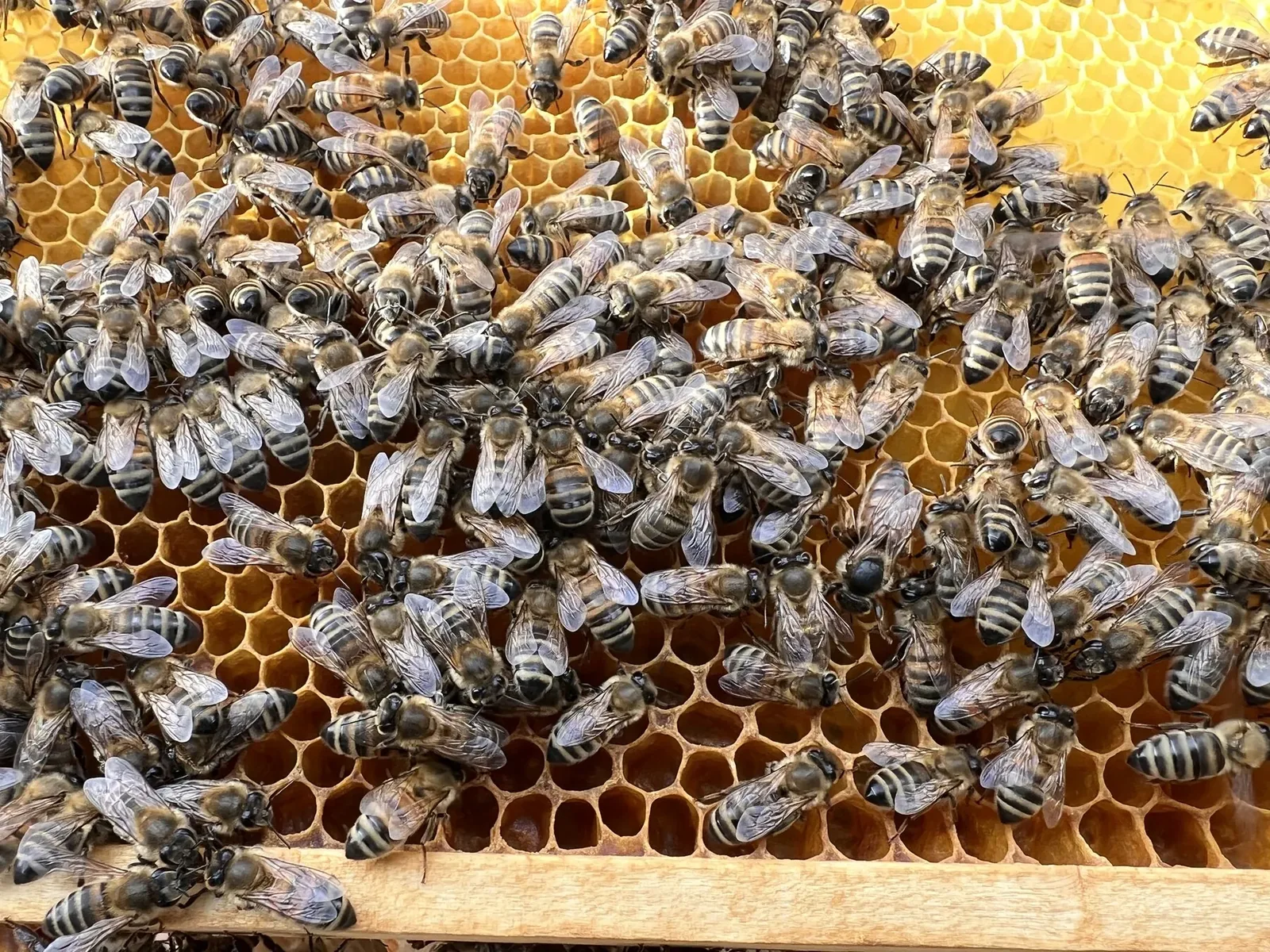
With my sisters, I build comb. Tiny flakes of wax form on my abdomen. We work them into walls so thin that light can shine through, and into hexagonal cells that hold brood and stores.
Foragers bring nectar. I receive it and pass it on. Enzymes change it; water evaporates. Slowly, the watery nectar becomes a lasting store. Humans call it honey. For us, it is energy for days when there is nothing to find outside.
I warm the brood. I help move the air. Sometimes, at the entrance, I check the scent of an arriving bee. The boundary between our home and the outside world is barely wider than my body.
A worker’s tasks: a flexible life
Young workers often take on cleaning and care. In the following weeks, their tasks may also include tending brood, producing wax, building comb, processing nectar and guarding. Many begin foraging regularly at around two to three weeks of adult age.
There is no fixed rota. Tasks overlap, and not every bee becomes a guard or a scout. If foragers are missing, younger bees can fly out earlier. Older bees can return to caring for brood when needed.
Brood food is produced mainly in the hypopharyngeal and mandibular glands in the head. Nurse bees need nutrients, particularly from pollen, to produce it. Wax is secreted by glands on the underside of the abdomen. Muscle activity generates heat; fanning bees help ventilate the hive. Guards check arriving insects and can repel unfamiliar bees, wasps or hornets. Workers have a sting.
Workers also rest and sleep. Among other things, sleep supports accurate dance communication.
Now comes the sky.
Outside the entrance, it is bright. I lift off and turn back towards the hive. Its position, the shapes around it: I must find this little piece of the world again. My first flights do not take me far.
Then a flower lies before me. The wind moves it as I land. My whole weight rests on a few legs. I take up nectar. Pollen clings to my body; I brush some of it together and carry it home on my hind legs.
By the time I begin foraging regularly, I have already spent a considerable part of my short adult life inside the hive. I have known darkness longer than light.
Now I fly through a world of scent, sunlight and familiar routes. I bring a rich source home with me: as a load, and as a message. In the darkness, I dance. Others follow my movements and can find outside what I have found.
How I navigate, dance and gather stores
Honey bees use the sun’s position, polarised skylight, learned landscape features and scents, among other cues, to navigate. Their sense of time helps them account for the sun’s changing position. Orientation flights begin before regular foraging.
In the waggle dance, the direction and duration of the waggle run convey information about the direction and distance of a source. The angle relative to gravity on the vertical comb corresponds to the angle relative to the sun outside. Dance intensity, scent and contact provide further clues about what is available.
Foragers bring nectar, pollen, water or plant resins. The resins are used for propolis. Pollen is an important source of protein; honey mainly supplies carbohydrates. Pollination takes place during flower visits when pollen is transferred between flowers.
When the old queen needs a new home
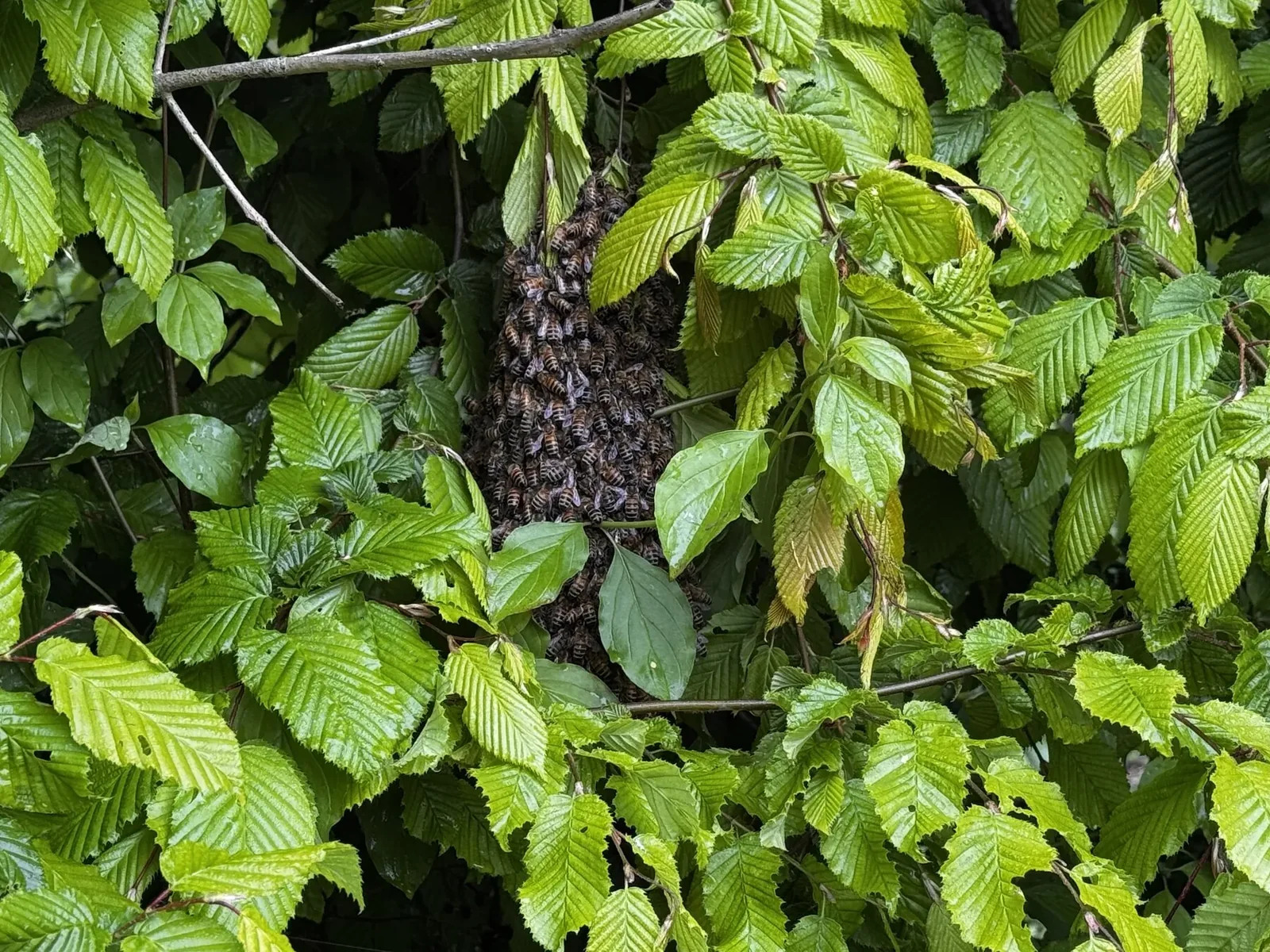
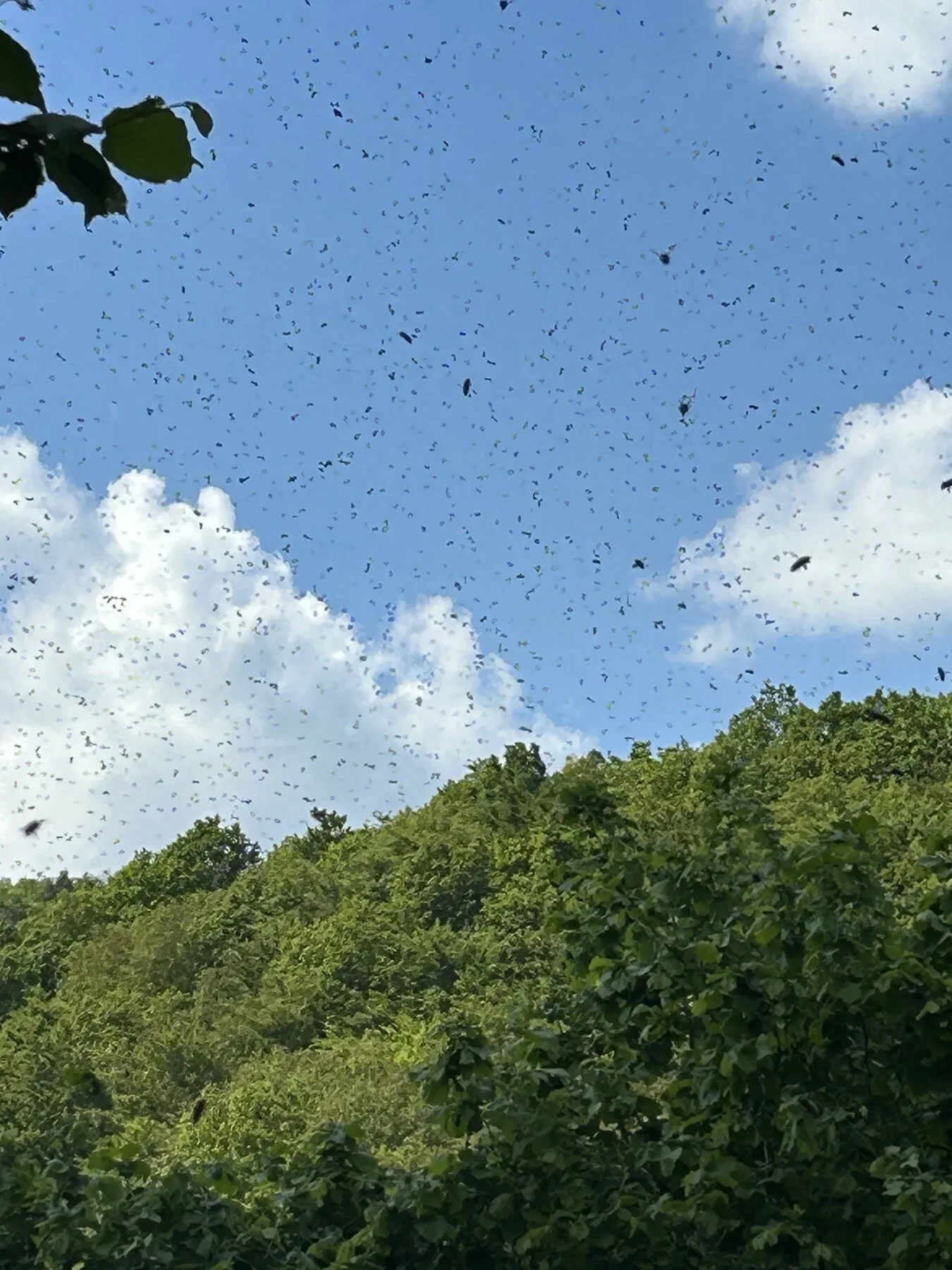
As our colony grows and the urge to swarm builds, the greatest operation of my life begins: swarming. The old queen leaves the hive with part of the colony. Out of chaos comes a house move on tens of thousands of wings.
For a while, we are a home without walls. We hang in a dense cluster from a branch, the queen among us. Our old nest is behind us. We have not yet found the new one.
I may be a scout. I search for tree hollows, cavities and sheltered places. I check the size, dryness, entrance and safety. There must be room for comb, stores and all the lives still to come.
Then I return and dance for the place I have found. Other scouts inspect it, agree and join the dance. Perhaps they first advocate another place. None of us knows every possibility. Each brings only the small part of the world she has seen herself.
This is how a decision emerges without a boardroom: through swarm intelligence. When enough of us have inspected the same nest site, many individual flights become one shared direction. We lead the old queen to a new home.
In this moment, I am more than a bee. I am scout, estate agent and removal crew for a flying state.
Life’s end and legacy
Outside, a shower of rain may be enough. Cold. A spider on a flower. A journey my energy can no longer sustain. Life is not safe inside the hive either: parasites, disease and a lack of food threaten us.
After about six weeks of summer life, my wings are frayed. My body is worn out. Journeys that were easy demand more strength. Perhaps one day I will not return. No grave. No monument. Just one voice fewer in the hum.
Inside the hive, a cell I cleaned remains clean. A larva I fed keeps growing. A little food lies in a comb I helped to build.
No one needs to notice that I am gone. My work is still here.
Humans often see only the jar of honey. They do not see the 21 days before I emerged, the food from the glands in my head, the dances in the dark or the torn wings at the end.
I am small enough to be overlooked.
But important enough that a whole world would be poorer without me.
Swarming, danger and the long lives of winter bees
Swarming is a honey bee colony’s natural way of reproducing. Often, the existing queen leaves with some of the workers while young queens develop in the old nest. The season, colony development, space and other factors influence preparations for swarming. An overcrowded hive alone does not explain it.
Scouts dance to promote possible nest sites. Others inspect them. A sufficient number of scouts at a site contributes to the collective decision. The queen does not choose the new home alone.
Summer workers often live for only about four to six weeks as adults; their actual lifespan varies. Winter bees can survive for several months. Their different physiology and lighter foraging workload help the colony through the cold season.
Weather, including cold and heat, hunger, predators, traffic and certain pesticide exposures can endanger bees. Within the colony, the Varroa mite and associated viral infections are particularly important risks. During robbing, other bees enter a colony to take its stores. Wing wear is visible, but does not explain every death on its own.
02 · The queen
You call me
queen.
From a larva fed in abundance to the mother of an entire colony.
I begin like any other bee: as a tiny egg. No bigger, no more golden, no more royal. The life ahead of me comes not from a special kind of egg, but from the way I am fed as a larva.
My sisters receive brood food at first too. But my care is uncompromisingly different: royal jelly, in abundance, throughout my larval life. The amount and composition of this food set my body on a different path. The cell around me is spacious and hangs downwards.
Even as an adult queen, the workers in my retinue continue to feed me glandular food. An ordinary female larva becomes a queen who will depend on her daughters for the rest of her life.
My body is not built for foraging flights. It is built for offspring. I grow larger, heavier, longer-lived and more fertile than my sisters. My task is brutally simple and immense at the same time: I must lay a colony’s future, egg by egg.
About sixteen days after the egg was laid, I open my wax cap. I am not yet a mother. My place is not yet secure.
How a larva becomes a queen
Workers and queens normally develop from fertilised eggs. Nutrition during early larval development guides the formation of the two female castes. The amount, composition and duration of feeding work together. The future queen develops particularly large ovaries and a longer abdomen than a worker.
Queen larvae receive abundant royal jelly throughout their larval stage. Adult queens are also normally supplied with glandular secretions by workers. This does not mean uninterrupted feeding during the pupal stage.
- About three days in the egg. The larva then hatches.
- Until around day 8. Abundant feeding; the queen cell is then sealed.
- Until approximately day 16. Prepupal and pupal development, followed by emergence.
Special queen cells are built for swarming. If a queen is lost, workers can also use suitable young female larvae from ordinary cells to rear queens, enlarging the cells around them.
When several young queens are developing, a struggle begins for a place in the old home. Young queens kill their rivals, often while they are still in their cells. When they meet, they fight to the death. Some escape this fate by leaving with an afterswarm. My first task is not to preside. My first task is to survive.
I must go outside. Where no comb protects me and my sisters no longer surround me.
My brief sky
I learn the surroundings. Then I fly out to mate. High above the familiar earth, I encounter drones. I mate in the air, with several males, sometimes over several flights.
For the drones that mate successfully with me, life ends. I return. Inside my body, a store remains from which new life can arise for years.
I may lose my way. A bird may catch me. I may not mate sufficiently. My long life begins with a few days in which everything can be lost.
What really happens on a mating flight
A young queen becomes sexually mature only after emerging. In suitable weather, mating flights usually take place during her first weeks of life. Giving a fixed day would overlook temperature, weather and individual development.
She normally mates with several drones from different colonies. Some of the sperm she receives reaches the spermatheca, the sperm-storage organ, where it can remain capable of fertilising eggs for years. Not all the sperm transferred is stored.
After successful mating, egg-laying usually begins within a few days. Poor flying weather can delay the entire process. Multiple mating increases genetic diversity among a colony’s workers; it does not guarantee that related bees will never meet.
Egg by egg
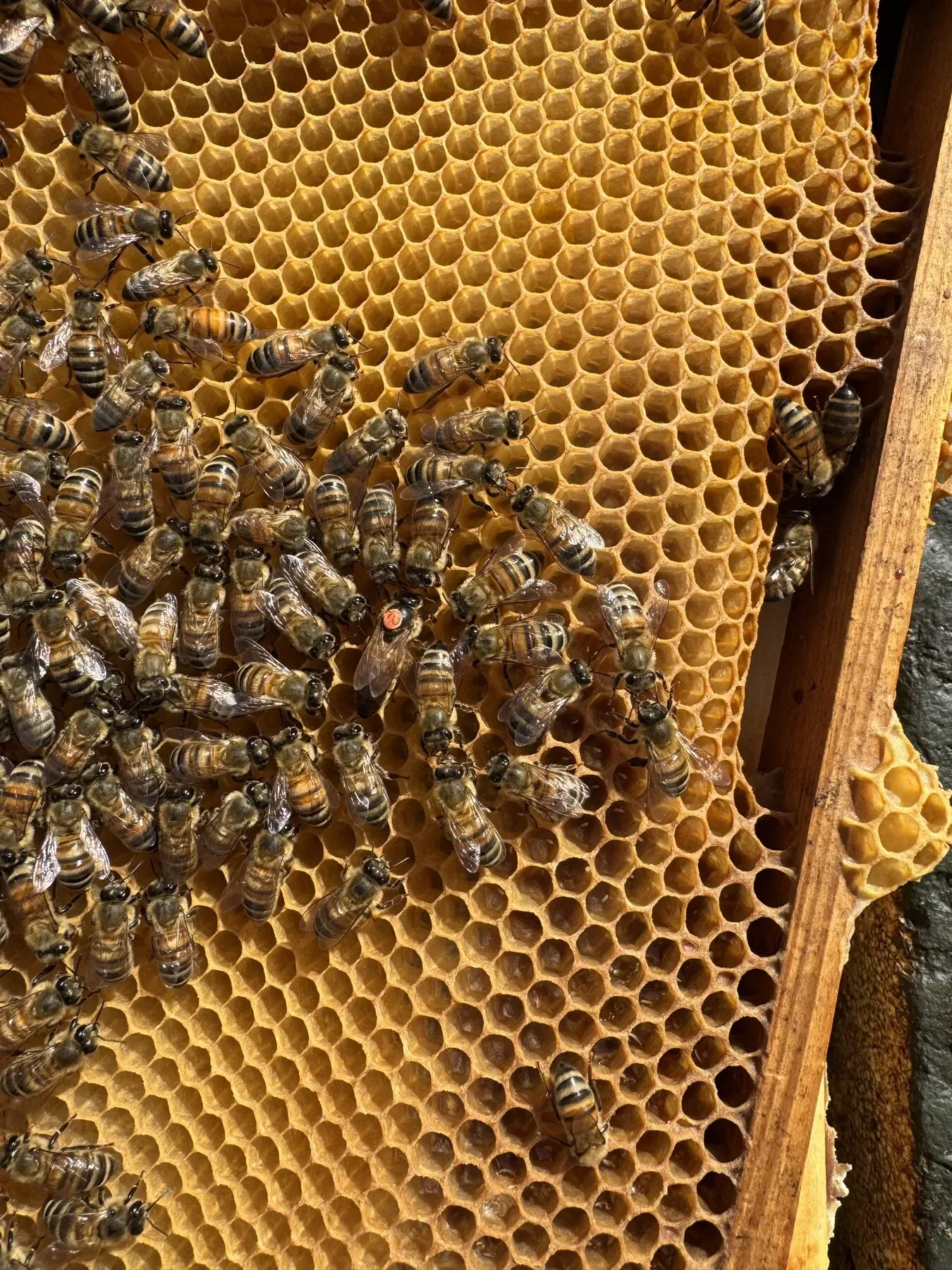
A cell. I lower my head into it and check its width with my forelegs. In a small worker cell, I usually release sperm to fertilise the egg. In the larger drone cell, I leave it unfertilised. Then I turn and lower my abdomen inside. An egg remains.
Then the next.
My fertilised eggs develop into workers or, if they are reared accordingly, new queens. My unfertilised eggs become drones.
On productive days, I lay more than two thousand eggs. Together, they weigh more than I do. Over my lifetime, I may produce hundreds of thousands of offspring.
Thousands of offspring have come from my body. Not symbolically, but literally. Egg by egg, comb by comb, generation by generation. Thousands of daughters: nurses, builders, guards, foragers, scouts. I do not fly to the flowers, but through my daughters my influence reaches for kilometres into the landscape.
Yet none of my eggs becomes an adult bee through me alone. Someone has to build a cell, gather food, feed a larva, keep it warm. What comes from my body needs an entire colony to keep it alive.
Egg-laying, sex determination and the language of scent
Before laying, the queen checks a cell’s width by putting her head inside and using her forelegs. She usually lays fertilised eggs in smaller worker cells and unfertilised eggs in larger drone cells. To do so, she regulates the release of sperm from her spermatheca. Queen cells also receive a fertilised egg or a young female larva. Cell width is an important signal, rather than a human planning process or an infallible control mechanism.
This simple rule has biological exceptions: with certain matching variants at the sex-determination gene, fertilised eggs can also develop into diploid male larvae. Workers usually remove them early. In queenless colonies, workers can lay unfertilised eggs.
At the height of the season, a productive queen can lay more than 2,000 eggs a day. Their combined mass can exceed her own body weight. This is a possible peak, not an annual average. Season, food supply, colony strength and the queen’s condition determine actual performance.
Queens release several pheromones. These influence their retinue and the workers’ reproductive physiology, among other things. They are passed on through contact within the colony. A scent is neither a work order nor a guarantee of health or freedom from swarming.
Supported by my daughters
My reign is no system of commands. I give no work orders. My scents carry a message through the hive: I am here. My daughters sense me, tend me, feed me and spread my scent through their contacts.
They stand around me. Groom me. Their antennae touch my body. They keep me warm and protect me. Without them, I am a single insect with a large abdomen and a short future.
The living heart they take with them
I have helped to found a new colony. As the urge to swarm grows, my egg-laying is reduced. My daughters feed me differently; my body becomes lighter and better able to fly again. At last, I leave the old home with thousands of workers.
I do not decide which flower is visited. I do not choose the new hollow. Scouts search for our new home. I am the living heart they take with them.
I have survived, although my position has never been assured. If my performance declines, the colony rears a successor. A queen is powerful, but never beyond replacement.
My eggs become fewer. My reserves will not last for ever. Our shared life can renew itself as mine comes to an end.
Humans call me queen and imagine a crown, power and commands. The truth is different. I am no monarch in the human sense. I am a living reproductive organ of the colony, sustained by care, scent and expectation.
I was not born to be free.
I was born to become a colony.
A long life, swarming and a possible successor
Queens can live for several years, but are often replaced earlier. During supersedure, the old and young queen may coexist for a time. “One colony, always exactly one queen” is therefore too absolute.
Before a prime swarm leaves, workers change the existing queen’s feeding, among other things. Her egg-laying and weight may decrease, making her better able to fly again. She leaves with part of the workforce. A successor develops in the colony left behind.
The queen does not establish a colony by her own efforts. She needs workers for comb building, food, brood care and warmth. Her reproductive output is exceptional, but her contribution remains part of a shared achievement.
03 · The drone
One moment
in the open sky.
Born without a father, made for a mating that ends in death.
I am the one people like to smile at in the colony: large, round, loud, with no sting, no pollen baskets and no career in honey. I do not clean cells, feed larvae or defend the entrance.
But anyone who sees me as just another mouth to feed does not understand the colony. I am no worker. I am a flying genetic message. My task is not the daily routine. My task is reproduction.
I develop from an unfertilised egg. That means I have a mother, but no father. My genes come directly from the queen. Biologically, I am a risky, noisy, energy-hungry investment in the next generation.
My cell is larger than my sisters’ cells. Nurses feed me. Later, a wax cap arches over me. About twenty-four days after the egg was laid, I chew my way free. My body is not yet ready for the encounter it is built around.
24 days to a drone — and what “without a father” means
A typical drone develops from an unfertilised egg and carries a single set of chromosomes. This comes from his mother, but is reshuffled during the formation of her eggs. The drone is not a clone of the queen.
- About three days · Egg. The larva then hatches.
- Until around day 10 · Larva. Workers feed him. The larger drone cell is given a distinctly domed cap.
- Until approximately day 24 · Development under the cap. Flight muscles, wings, large compound eyes and reproductive organs develop, among other structures. After emerging, the adult drone still has to mature.
“Without a father” describes the typical haploid drone in this story. Rare diploid males from fertilised eggs are an exception. Egg-laying workers can also produce drones.
At first, I stay in the colony’s shelter. My body matures. Young drones are fed by workers; later, I can take honey from cells myself. Others brought in the stores I consume.
Then I begin to fly. I return. Fly again. My life is not waiting for a single outing, but for an encounter that none of my flights can promise.
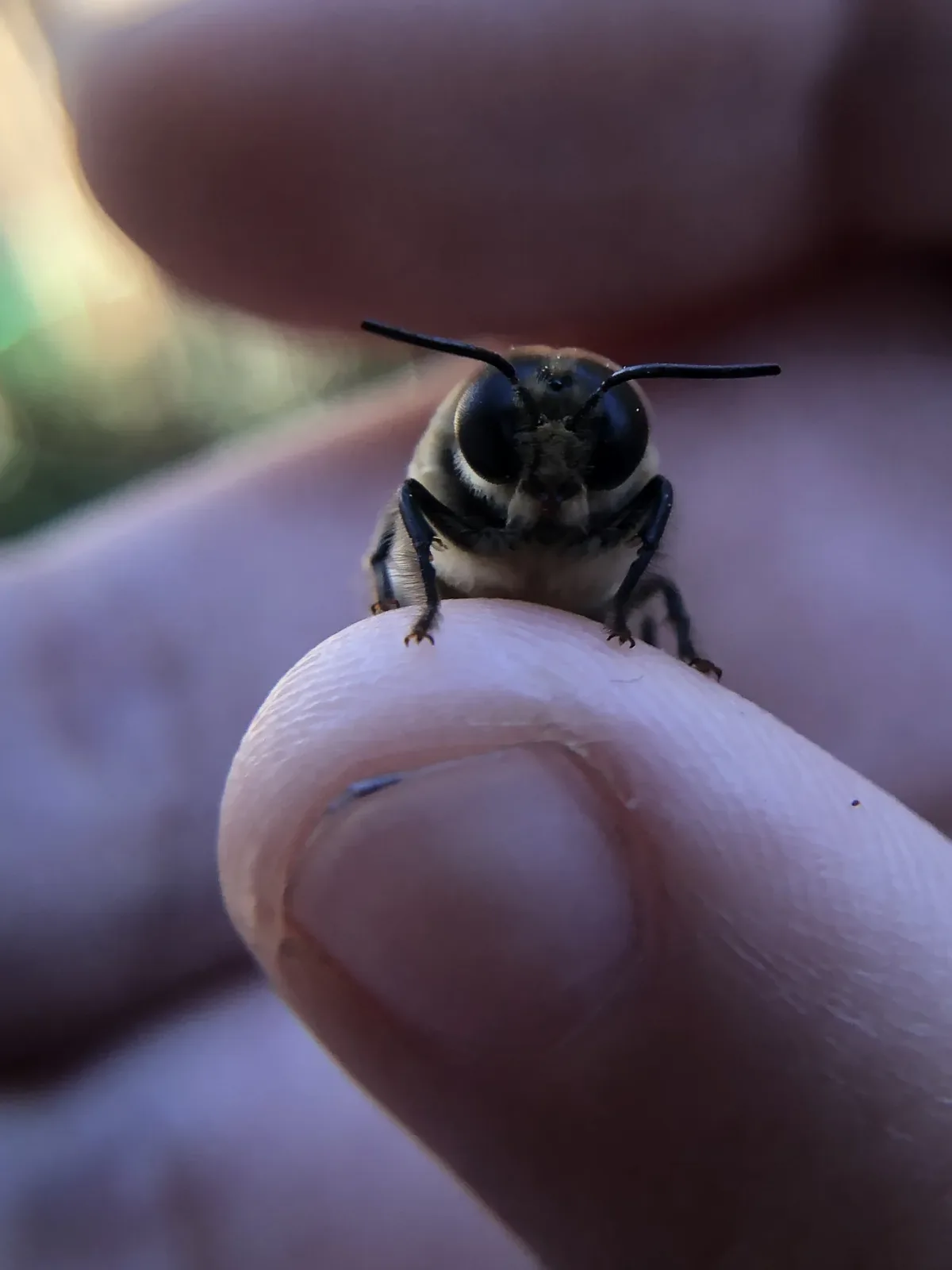
A meeting place in the air
There are places in the sky where drones from many colonies gather. No comb shows the way. No sign marks the meeting place. And yet, in suitable weather, we gather there, again and again.
When a young queen appears, the air stirs. My body is built for this moment. My large compound eyes help me recognise queens in flight. My flight muscles carry me into the air. My purpose is not survival. My purpose is a successful encounter.
Many fly. Only a few reach a queen. Most of us will never mate.
Drone congregation areas and a body built for the search
Drones begin with orientation flights. They often reach sexual maturity around the second week after emergence; age, nutrition and conditions influence the process.
Males from numerous colonies meet at drone congregation areas. Landscape and horizon features play a role in their navigation. Not every detail of how these areas form and how bees find them again has been fully explained.
Large compound eyes, powerful flight muscles and sensitivity to queen pheromones help the search. Drones have no sting and none of the specialised pollen baskets of workers. They do not normally collect nectar, pollen or plant resins for the colony. They can generate muscle heat, but do not take on the workers’ broad range of care and foraging tasks.
Mating is unlikely for any individual drone. No fixed success rate is deliberately given here: it depends, among other things, on the location, the number of drones and the number of queens ready to mate.
My greatest achievements
If I mate successfully with a queen, my life ends. My mating organ everts; separation injures me fatally. I fall and die. It sounds cruel. For a drone, it is the greatest possible success.
If I succeed, I do not survive my triumph. My death is no accident on the job. It is the price of reproduction. While workers wear themselves out for the colony, I make my contribution in a single moment.
What I pass on can remain inside her body. Later, it may become part of new workers. They will clean cells, feed larvae, build comb, fly out. In a colony whose nest I will never see.
I am part of the colony’s genetic strategy. Without drones, there is no mating. Without mating, there are no fertilised eggs from which the next workers and queens can develop.
I connect colonies. A young queen mates outdoors, in the air, with drones from the surrounding area. In this way, genetic diversity is carried into the next generation.
Why successful mating ends in death
During mating in flight, the drone’s endophallus is everted. Ejaculation and subsequent separation cause fatal injuries. Parts of the mating apparatus can remain attached to the queen as a mating sign and be removed during later matings.
The drone’s death is directly connected to this mechanical mating process.
Multiple mating with drones from the surrounding area connects the genetic lineages of different colonies. Drone congregation areas and flight distances reduce the likelihood of mating between close relatives, but do not rule it out completely.
When summer leaves
Perhaps this encounter never comes. Then I keep flying for as long as the weather and my strength allow.
And even if I never reach a queen, I was not pointless. My presence tells of the energy our colony has invested in reproduction. Drones are luxury, risk and future all at once.
In spring and summer, I am tolerated, fed and needed. But as forage dwindles and winter draws nearer, the mood in the colony changes.
Then the expulsion of the drones begins. Workers drive us out of the hive, deny us access to stores, drag us away from the entrance. We are too costly for winter. We do not forage, we do not care for brood, and our warmth cannot replace the work of winter bees. The superorganism makes a cold calculation.
Those who do not die earlier on a mating flight often end up outside the hive. Starving, exhausted, excluded. Not out of malice, but because a honey bee colony survives without sentimentality.
Why drones are forced out of the colony
In many colonies, the so-called drone eviction begins as early as late summer, or earlier if food is scarce. Workers stop feeding the drones, deny them stores and drive them from the nest; they may also injure or kill them.
This reduces consumption as the reproductive season ends and winter stores become more important. Conditions within the colony and the food supply influence the behaviour. In the story, the image of a colony making a “cold calculation” describes the harsh consequences for an individual drone; it does not imply conscious calculation or a human moral judgement.
The timing is not the same everywhere. Queenless colonies, or those with an unmated queen, may keep drones longer. Not all drones die through expulsion: predators, disease, weather and exhaustion also limit their lives.
Legacy
Humans often see me as the hive’s idler. They see the heavy body, the noisy flight, the appetite. They do not see the biological purpose behind it.
I am the colony’s wager on the future. I am no forager and no soldier. I am a flying carrier of genes with an expiry date.
My life has only a few possible endings. The harshest is to be cast out.
The greatest is to die in flight,
at the very moment my genes live on.
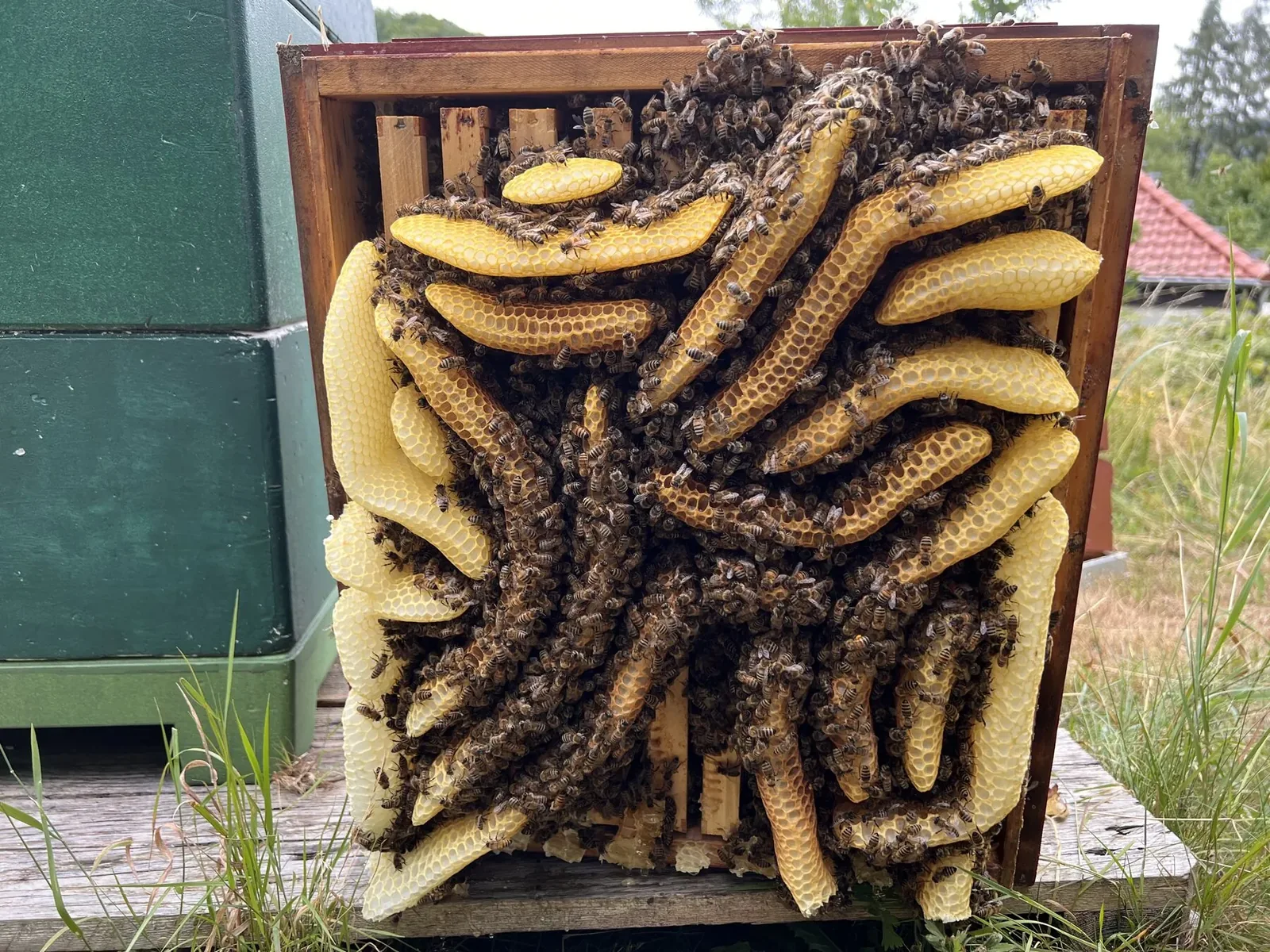
Epilogue · The colony remains
What remains
of a life.
One day, the worker does not return. The queen may live for years, yet will eventually be replaced. The drone passes on his genes, or his life ends without a successful mating.
Meanwhile, a new egg lies in the comb.
A nurse bends over it. A forager comes home. A bee receives her nectar. The work passes from body to body, from one generation to the next.
In winter, the workers draw together. Their muscles generate warmth. They live on stores that others helped to gather. None of them has foraged through the whole summer. Together, they carry it through the cold.
When conditions allow, brood develops again. New workers emerge. Later, drones develop. Perhaps young queens will be reared; perhaps the colony will divide.
Not every colony survives a winter. But where life continues, lives that have never met become connected.
No single bee knows the whole plan. Yet scent, touch, food, warmth and a thousand small actions bring forth a shared life.
The individual bee passes.
The colony lives on.
How the community survives winter
Honey bees overwinter as a colony. Winter bees form a cluster with the queen, generate muscle heat and use honey stores. Over the winter, they move towards food they can reach. When brood is present, a particularly warm area is needed.
The broodless period does not last equally long everywhere. Climate, weather, food supply and the colony’s condition influence when brood is reared. The story’s account of spring simplifies the yearly cycle; the queen does not everywhere resume laying on a fixed day in spring.
Stores, healthy winter bees and parasite control are important for survival. The colony renews itself with new individuals and can reproduce through swarms. This continuity is the biological connection behind the title “Three Lives. One Colony.”
About this story
Watch bees.
Share the wonder.
Philipp Ballier keeps bees as a hobby with his son Johannes in Kassel. This story grew from their close connection with the colonies: three paths through life that can only be understood together.
The first-person voices are literary. The biological background explores the Western honey bee, distinguishing typical processes from exceptions.
Johannes & Philipp — meet us ↗Sources & further reading
Selected expert sources on development, division of labour, nutrition, mating and life together. Editorial review: 15 October 2026.
- Washington State University: Honey Bees and Other PollinatorsUniversity introduction: typical development from egg to adult — around 16 days for queens, 21 for workers and 24 for drones.
- LAVES, Institut für Bienenkunde Celle: Bienenbiologie – eine EinführungBasics of comb, glands, lifespan, the yearly cycle and swarming. Older simplified statements about relatedness and larval food have been checked against more recent research.
- Johnson (2010): Division of labor in honeybeesA review of age-related, flexible division of labour and the importance of physiology, the social environment and the colony’s needs.
- Slater, Yocum & Bowsher (2020): Diet quantity influences caste determination in honeybeesExperimental larval rearing shows the important influence of food quantity on queen development; no single ingredient explains caste development.
- Klein et al. (2010): Sleep deprivation impairs precision of waggle dance signaling in honey beesHoney bees sleep. In the experiment, sleep deprivation reduced the accuracy of directional information in their waggle dances.
- North Carolina State University: The Honey Bee Dance LanguageA university explanation of dance communication: direction, distance, reference to the sun’s position and recruitment of other bees.
- Brutscher et al. (2019): Putative Drone Copulation Factors Regulating Honey Bee Queen Reproduction and HealthA review of multiple mating, sperm transfer and storage, changes in the queen after mating, and the death of the drone.
- Penn State University: Honey Bee Genetics BasicsHaploid drones, diploid females, genetic recombination during egg formation, the largely identical sperm of an individual drone, and diploid male exceptions.
- Woodgate et al. (2021): Harmonic radar tracking reveals that honeybee drones navigate between multiple aerial leksRadar tracking reveals recurring aerial congregation areas, shared flight routes and visits to several congregation areas during a single drone flight.
- Free (1957): The food of adult drone honeybeesObservations of workers feeding young drones and of older drones taking honey from comb cells themselves.
- Richardson et al. (2024): Pheromone relay networks in the honeybeeAutomated behavioural observation and modelling explain how workers spread the signal of the queen’s presence through contact within the colony.
- Seeley et al. (2012): Stop signals provide cross inhibition in collective decision-making by honeybee swarmsA primary study of collective nest-site selection: scouts exchange information and influence one another without central leadership.
- Koeniger (1970): Über die Fähigkeit der Bienenkönigin, zwischen Arbeiterinnen- und Drohnenzellen zu unterscheidenA primary study of cell inspection using the forelegs: sensing a drone cell influences whether the queen fertilises an egg.
- Penn State University: An Introduction to Queen Honey Bee DevelopmentThe seasonal peak of healthy queens’ egg-laying: more than 2,000 eggs a day, whose combined mass exceeds the queen’s own body weight.
- Gilley & Tarpy (2005): Three mechanisms of queen elimination in swarming honey bee colonies – Abstract und ForschungsberichtA primary study of killing before emergence, fights between queens and departure with an afterswarm; workers influence the process.