
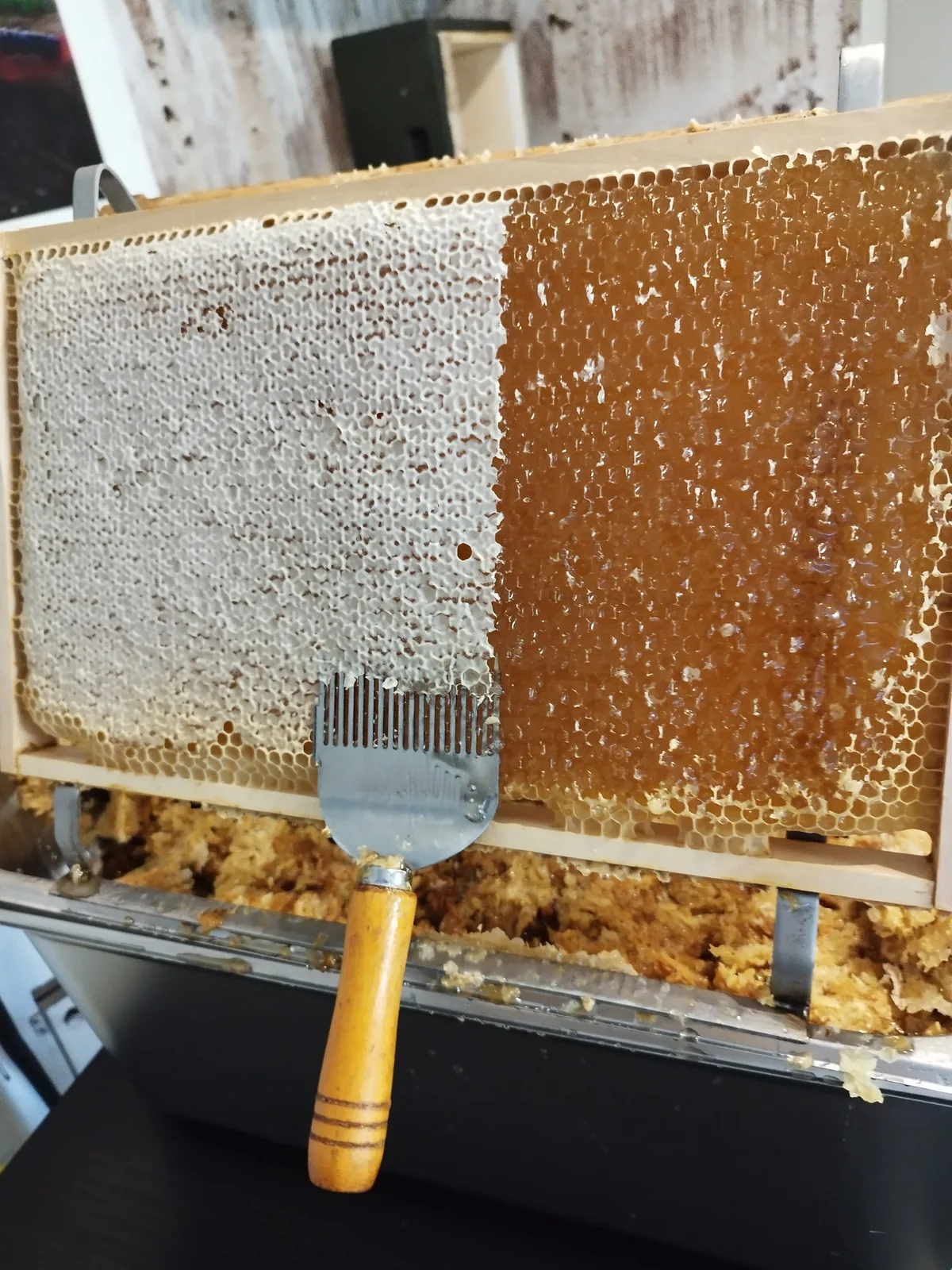
Creating a store
Foragers take nectar into their honey stomach and carry it to the nest. Honeydew can also provide the starting material: sugary excretions of sap-feeding insects. In the hive, the collected material is passed to other bees and processed further. Enzymes produced by bees change its composition while its water content gradually falls.
The concentrated store is placed in comb cells. Bees may seal filled cells of ripe honey with wax. For the colony, these stores provide food when little is available outside. Honey therefore does not first come into being in an extractor. The extractor removes honey that already exists from the comb.
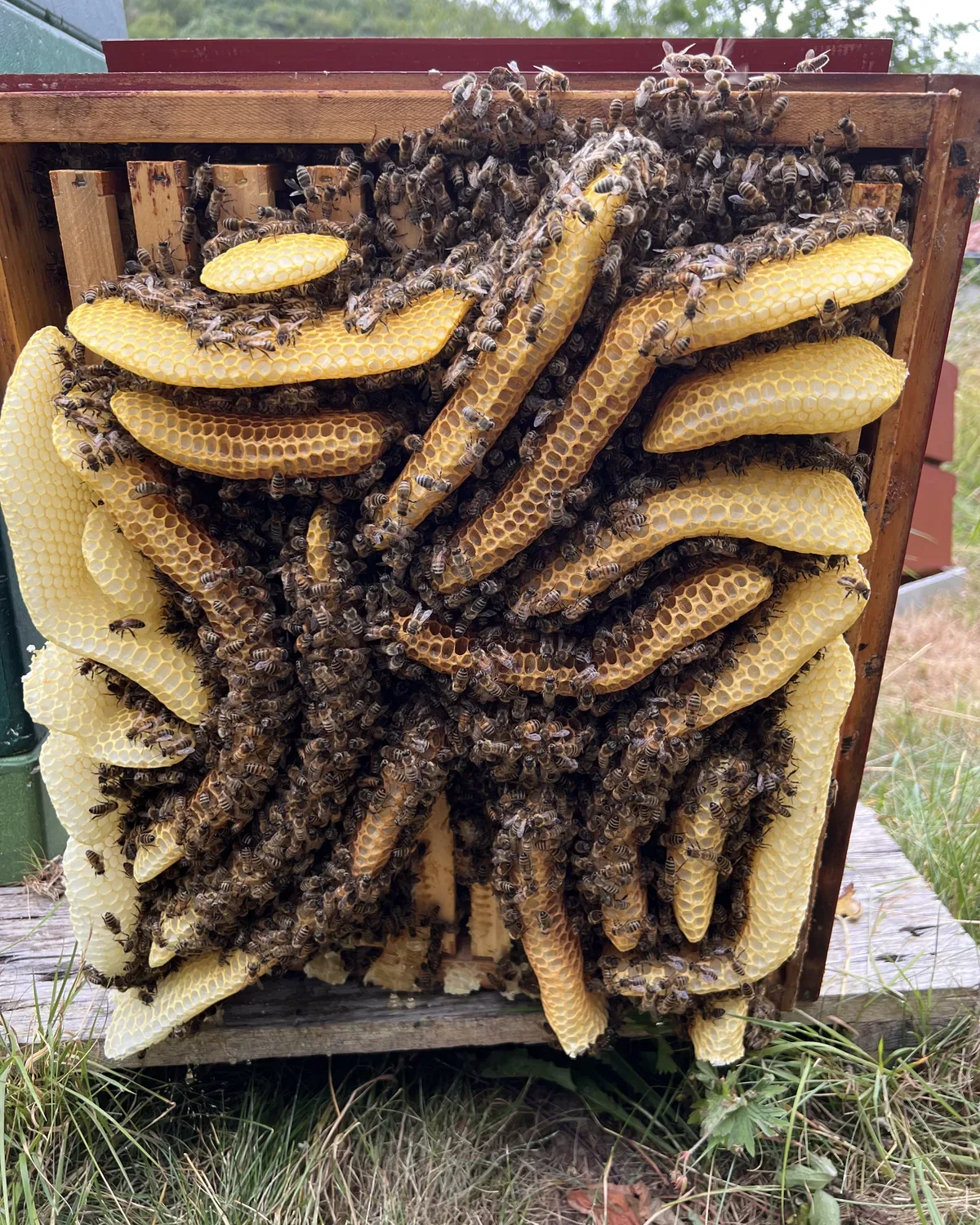
A landscape leaves its mark
Blossom honey and honeydew honey begin from different sources; both can occur together in one harvest. Which plants flower and how much nectar is available also depend on weather and season. Even harvests from the same site can therefore have different aromas and colours. Dark honey is not inherently better than pale honey.
An origin such as “Kirchditmold” describes a place. A botanical variety name such as “lime honey”, by contrast, describes the predominant plant source and must fit the honey’s characteristics. A single lime tree beside an apiary is not sufficient evidence. “Spring” and “summer” initially identify the harvest period; they guarantee no particular flower species.
Why honey sets
Honey mainly contains different sugars, especially fructose and glucose. Glucose can form crystals. How quickly this happens depends partly on the sugar composition, existing crystal seeds and temperature. Some honeys remain liquid longer; others set relatively quickly. In itself, this is not a quality defect.
A creamy consistency results from many fine, evenly distributed crystals. Careful stirring during crystallisation can influence this structure. No added cream or other substance is needed. Liquid, set and creamy are, first of all, descriptions of consistency.
Preserving aroma and condition
Honey is best stored cool, dry, dark and tightly closed. A cupboard away from the cooker and sunlight is more suitable than a warm windowsill. Close the lid after use: honey can absorb moisture and outside smells. Ordinary ripe honey usually does not need refrigeration.
To liquefy set honey, you can warm it gently in a warm water bath. Low temperatures and patience protect sensitive components; about 40 °C is a practical upper limit for gentle warming. Do not let water enter the jar. Prolonged warming or strong heat changes quality. Set honey can, of course, be enjoyed directly just as well.
Distinguishing crystallisation from spoilage
White patches against the glass can appear in crystallised honey because of air between the crystals. Not every change can be reliably identified remotely, however. An unusual fermented smell, newly forming gas bubbles or pressure inside the jar should prompt you to stop eating the product and ask the supplier.
Honey should not be given to children under one year old. It can contain spores that cause infant botulism. This applies even to small amounts used for sweetening. Normal household warming does not make it reliably safe for infants.
When comparing honeys, begin with scent, aroma and consistency. Then consider traceable origin. This page explains the food; information about the Kassel harvests actually available is on Honig-aus-Kassel.de.