
.jpg)
Consider several features together
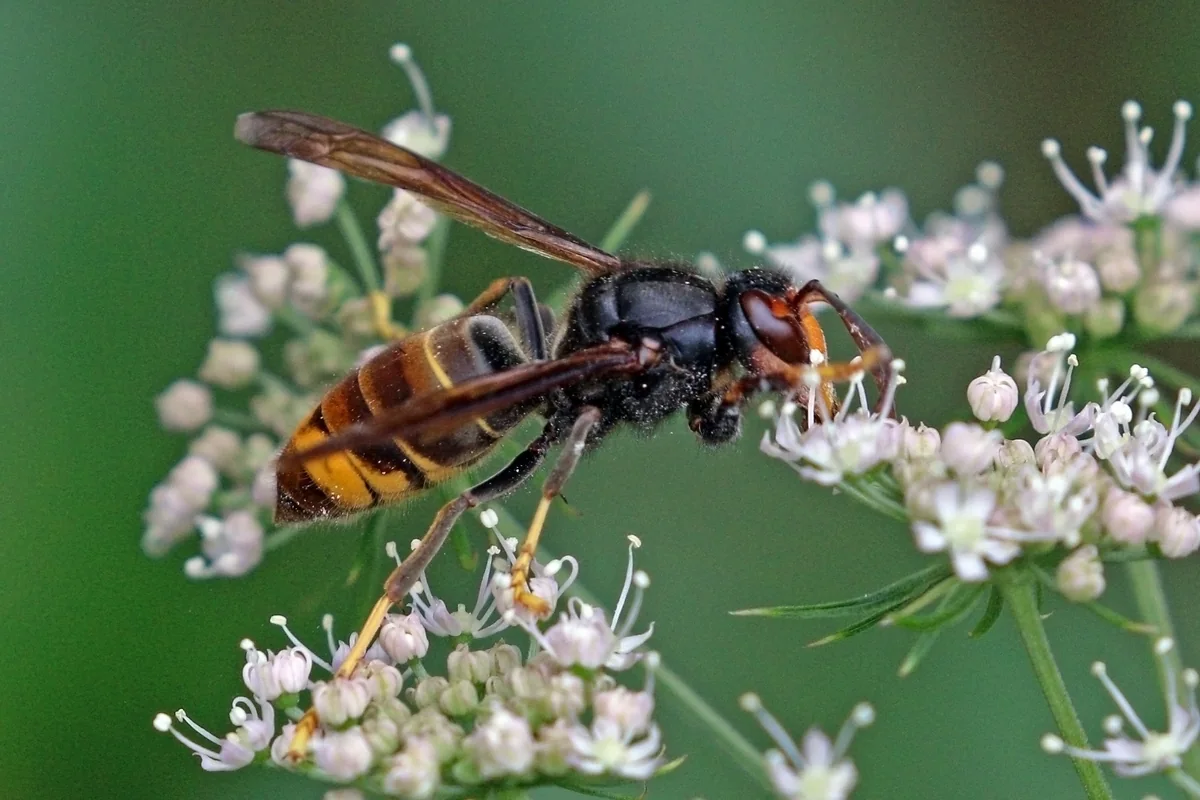
The Asian hornet found in Europe, Vespa velutina nigrithorax, has a predominantly dark body. Its yellow leg tips and a broad orange-yellow band towards the rear of the abdomen are conspicuous. The native European hornet, Vespa crabro, by contrast, shows more yellow on the abdomen and reddish-brown areas on the head and thorax.
A single colour feature is not always sufficient. Light, perspective and blurred photographs can mislead. Large hoverflies and other insects are also confused with hornets. Compare several visible features with HLNUG’s illustrations. The European hornet has special legal protection in Germany and forms part of our native wildlife.
A hornet year
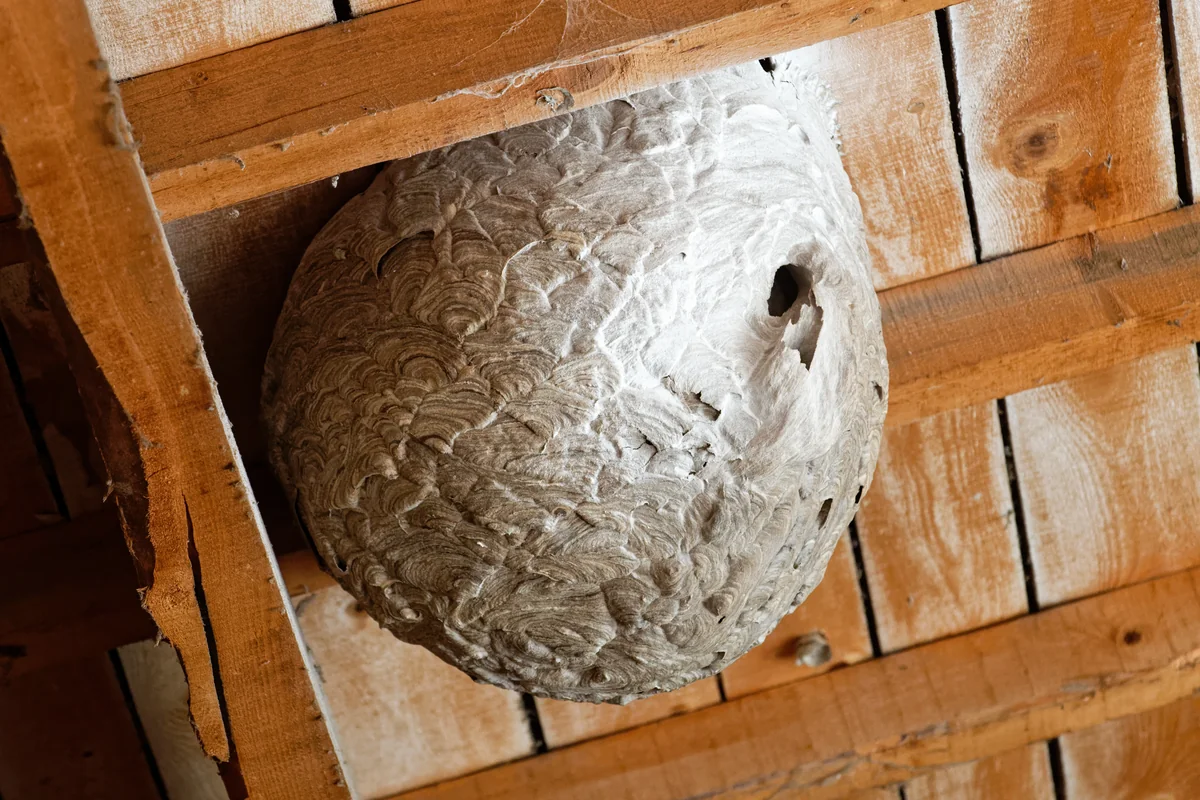
The Asian hornet forms annual colonies. Mated young queens overwinter and begin founding nests in spring. The colony grows through the season. Larger secondary nests may be high in trees; early nests also occur in more sheltered places. A large nest sometimes becomes visible only after leaf fall.
Adult hornets use sugary food. For their larvae, they catch insects, including honey bees and other species. At apiaries, hunting pressure can affect foraging activity. The consequences depend on the site’s circumstances. A single observed hornet does not establish the size of a nearby nest.

In Hesse, report with a photograph to HLNUG
Sightings and suspected nests in Hesse are recorded through the official HLNUG reporting portal. The state agency requires a photograph so that a report can be assessed by specialists. Take photographs only from a safe distance. Do not approach a nest to get a picture or try to catch animals.
Note the location, time and whether you observed an individual insect or a nest. For a nest, a description of its position is helpful. The specialist office checks identification and forwards confirmed nest reports according to its procedure. Submitting a report is not a promise of removal.
Removal is a case-by-case decision
Since 2025, the Asian hornet in Germany has been treated as a widely spread invasive species under management pursuant to Article 19 of EU Regulation 1143/2014. The nationwide management framework lists measures selected according to the situation. The earlier assumption that authorities must automatically remove every confirmed nest does not reflect current practice.
According to HLNUG’s current guidance, nature conservation authorities consider intervention where conservation interests are at risk. For nests on private land, affected people may need to commission specialist removal themselves. In public places where there is a safety risk, the responsible local public-safety authority should be involved. Please do not remove nests yourself or set improvised traps: indiscriminate trapping can harm other insects.
Monitoring spread and keeping knowledge current
The species has spread further in Hesse. For a local assessment, the current map of confirmed reports is more informative than a total permanently frozen in this text. Numbers of reports, actual nest records and duplicate reports are different measures.
The Kirchhain Bee Institute works with authorities and other partners in the Vespa velutina Hessen network on scientifically informed protection and management approaches. Research and responsibilities continue to develop. The linked official pages therefore take precedence when they publish new guidance after the date stated here.
This page was checked on 13 October 2026 against the specialist sources listed below. It provides orientation and does not replace expert assessment of a nest.