
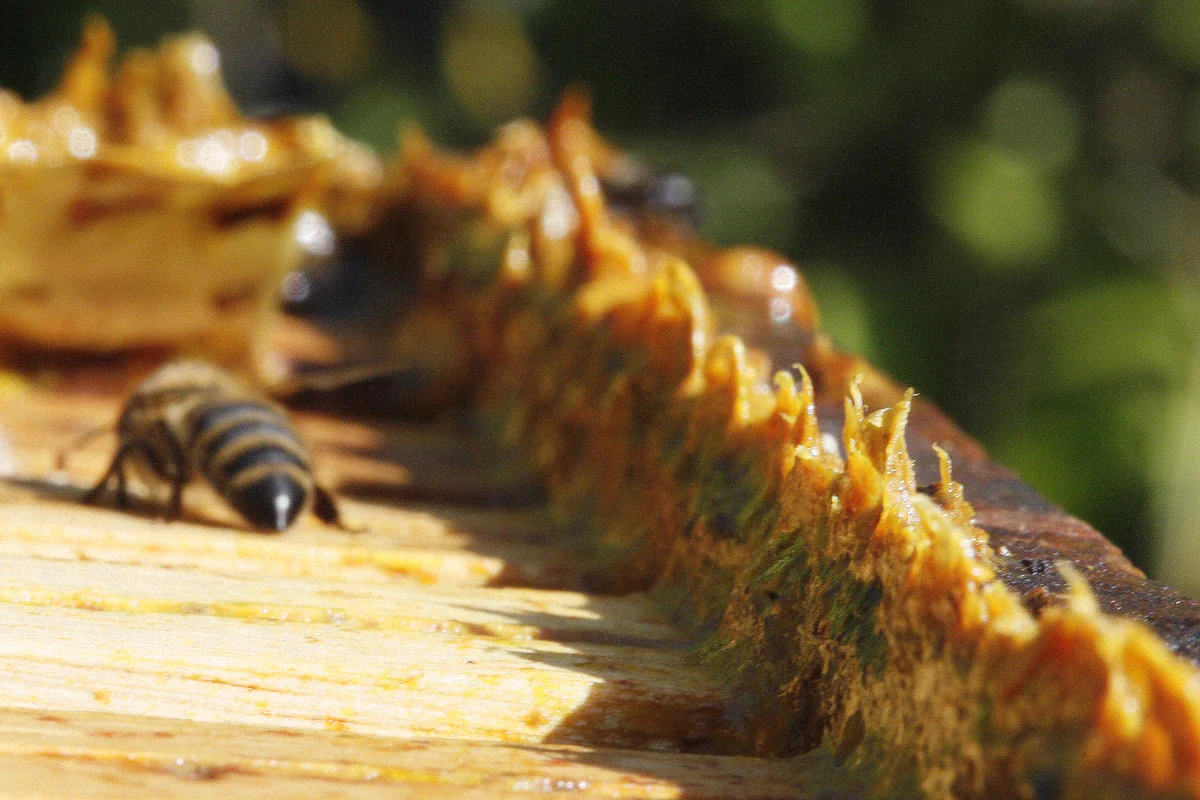

The building material grows outside the hive
Plant resins are complex mixtures that plants use, among other things, to protect sensitive tissues. Honey bees gather these materials from buds and other accessible plant parts. In our latitudes, poplars can be important sources. Which resins are available varies with vegetation, season and location. A colony therefore does not collect an identical product everywhere according to a fixed chemical recipe.
Inside the nest, the collected resins are processed and mixed with materials including wax. Propolis is the term for this material as used by bees. Colour, smell and consistency can vary considerably. Brown is therefore not a complete description, and a strong scent alone does not reveal the precise composition. A piece of propolis carries something of the surrounding plant life within it.
Sticky cargo takes teamwork
Collecting resin calls for different movements from a quick nectar visit. A worker handles the material with her mouthparts and legs and transports it on her hind legs. Unlike dry pollen, the load is tough and sticky. Work continues after her return: other workers help remove it and process the material in the nest.
This links a particular resin source outside with a specific task inside. Looking only at the finished product misses those journeys. Between bud and sealed joint lie searching flights, transport and cooperation. Not every returning bee with a load on her hind legs is carrying pollen. Supplies for the hive include things that nobody stores as food.
Nakamura and Seeley observed resin foragers also taking part in using resin inside the hive during the day. There was no strict division between collecting and processing in this case. Loads were delivered deep in the nest where they were needed. Bees bringing in resin can therefore also learn where it is required.
Furnishing a home from within
Bees apply propolis to gaps, joints and rough surfaces. They can use it to seal cracks and coat surfaces. In natural tree cavities, a continuous resin layer often forms on the inner walls, known in research as a propolis envelope. The nest is therefore more than a wooden hollow fitted with comb. Its inhabitants modify their immediate surroundings.
This layer has both a mechanical and a chemical dimension. A sealed crack is a changed opening. A resin-coated surface is also a different habitat for microorganisms from untreated wood. Both aspects belong to the material’s story. Viewing propolis solely as glue misses part of its importance to the shared home.
Defence can begin outside the body
Each bee has an immune system of her own. At the same time, some behaviours affect the whole community: removing diseased brood, for example, or shaping the nest environment. Researchers call this social immunity. With propolis, the interesting idea is that collected plant compounds can change the conditions in which many individual bees live.
A 2009 study by Simone, Evans and Spivak showed changes in the activity of certain immune genes following exposure to propolis extracts; bacterial load also fell with one of the sources tested. This is a finding under particular experimental conditions. It supports the importance of the nest environment, but does not turn every piece of resin into a universal remedy for all bee diseases.
What a resin-rich nest changes through the year
In 2015, Borba and colleagues followed large colonies with and without a natural propolis envelope through the year. In resin-rich nests, the baseline activity of several immune genes was lower and more consistent in summer and autumn. This may fit with a less costly continuous activation of defences. At the same time, measured pathogen and parasite levels did not generally differ between the groups.
The distinction matters. Lower activity of an immune gene does not automatically mean a weakened bee; conversely, altered gene activity alone does not demonstrate a longer lifespan. The study found some benefits in only one of the two years examined. Its result is therefore strongest when its limits are considered too: propolis influences the system, but the nature and strength of its effects depend on the context.
Why the home’s surfaces help shape the outcome
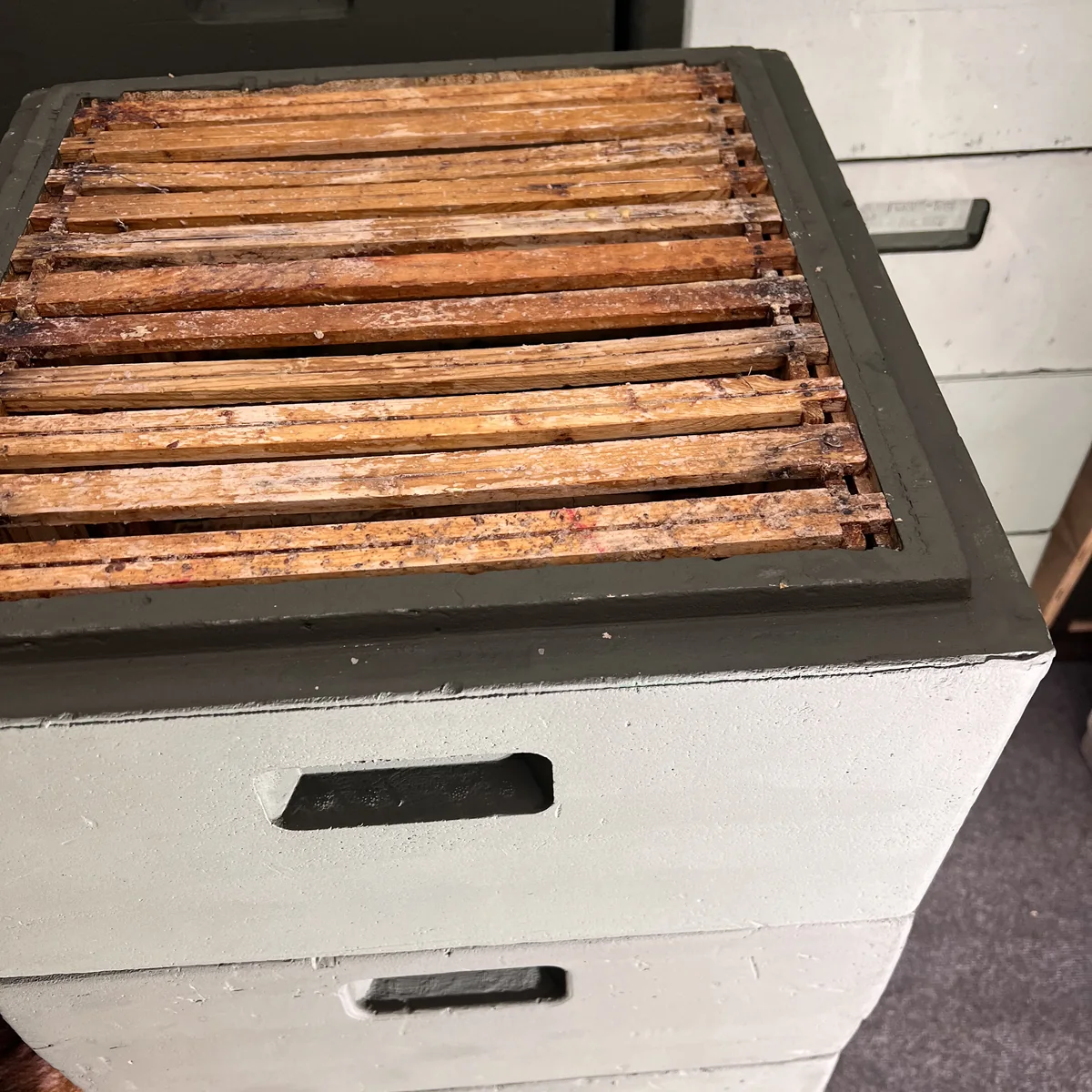
A more recent field study by Shanahan and colleagues in 2024 compared, among other things, smooth and rough hive interiors. Rough wood particularly encouraged bees to deposit propolis. More propolis was associated with changes in several health measures. At the same time, this provision did not improve overall colony survival. Individual effects also differed between years and management conditions.
This brings an inconspicuous detail into view: a colony’s behaviour can be shaped not only by the landscape it reaches but also by the surfaces its home offers. A smooth wall and a rough tree hollow present different tasks. The study does not provide a simple construction plan for guaranteed healthy colonies. It shows how closely material, behaviour and collective defence are connected.
Propolis belongs first to the story of bees
Conversations about propolis often turn quickly to products for people. The biological story, however, begins with foragers and their nest. Research on bees cannot automatically be transferred to human uses. Even in the hive, propolis replaces neither adequate nutrition nor attentive care and competent management of diseases and parasites.
The different view of this material is already rewarding. A sticky joint is more than untidiness. It can be the visible end of a collecting journey. A thin coating on a wall is not lifeless wallpaper, but part of an environment the colony has made itself. Bees build their home with more than wax. They bring plant properties inside and turn many little loads of resin into a shared protective space.
Sources & further reading
- Simone-Finstrom & Spivak (2010): Propolis and bee healthResearch review: resin sources, transport, processing, mechanical function and the propolis envelope.
- Nakamura & Seeley (2006): The functional organization of resin work in honeybee coloniesPrimary study: resin foragers also take part in using resin inside the hive; unloading at the sites of use in the nest.
- Simone, Evans & Spivak (2009): Resin collection and social immunity in honey beesPrimary study: immune gene expression and source-dependent bacterial load following exposure to propolis extracts.
- Borba et al. (2015): Seasonal benefits of a natural propolis envelopePrimary study: seasonal effects of a natural propolis envelope; no general reduction in measured pathogen load.
- Shanahan et al. (2024): Thinking inside the boxPrimary study: rough interior surfaces, propolis deposition, immune and pathogen markers; no general improvement in colony survival.
- University of Minnesota Bee Lab: Spivak Lab ResearchResearch institution: context for propolis research and social immunity.