
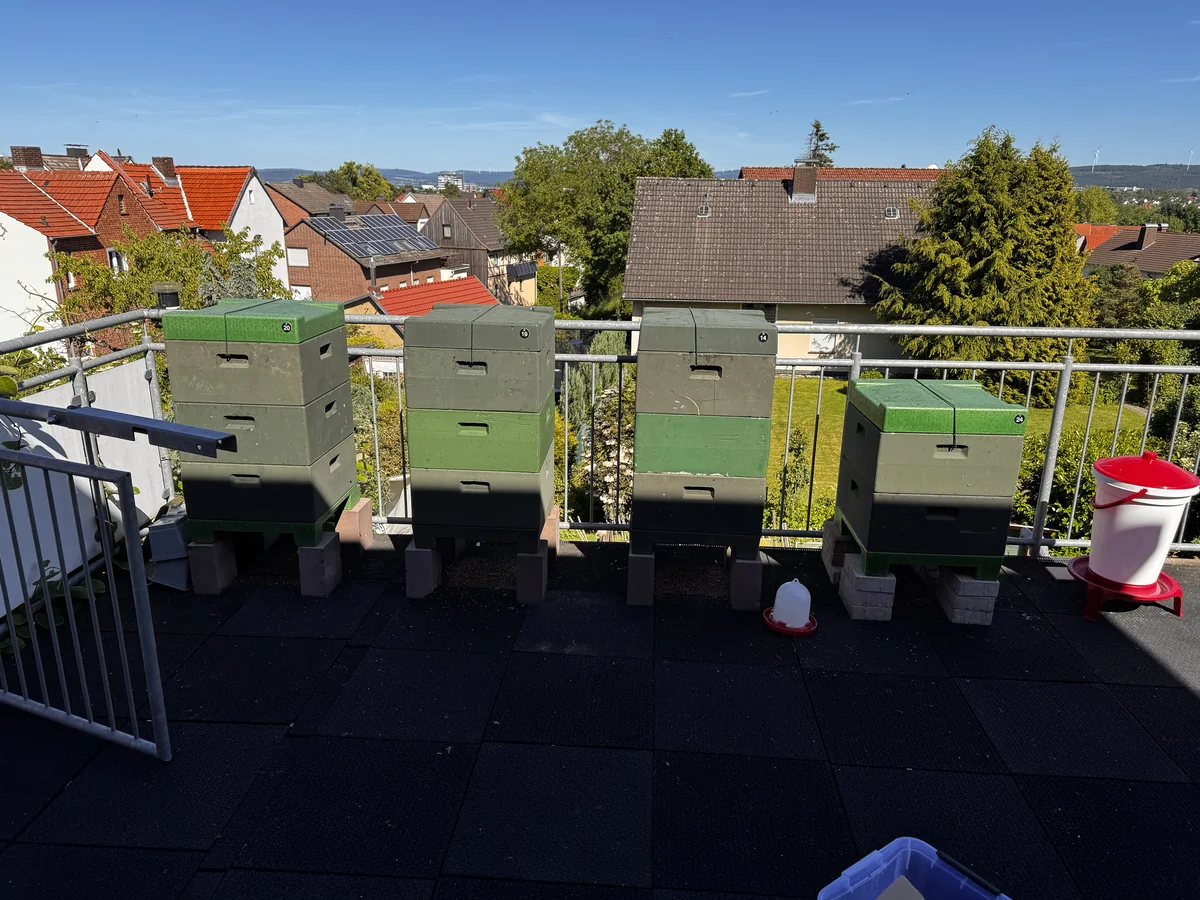
A bee does not read town signs
Town and country are human categories. For a bee, what matters is whether flowers within reach offer the food it needs, whether a suitable nesting site exists and whether its offspring can develop. That combination may lie beside a garden wall, in an old sandy patch or in a species-rich meadow. On a map, such places often seem insignificant. In a small bee’s life, together they can make all the difference.
That alone makes a blanket ranking of little use. The group of animals considered also changes the result. A study of all flying insects answers a different question from a count of wild bees. Nor does a well-provisioned honey bee colony tell us whether a specialised wild bee species finds suitable conditions in the same surroundings. Anyone comparing habitats should first make these differences clear.
What a comparison of German sites reveals
A study published in 2020 compared flower-rich areas in nine German cities with matching flower-rich sites in their surrounding countryside. At urban sites, researchers found more bee species and more frequent flower visits by bees. Pollination of red clover plants placed there was also higher. At the same time, the total species richness of all the insects studied was greater in the countryside; flies and butterflies, among others, showed different patterns.
The original paper by Theodorou and co-authors therefore makes two things clear: cities can contain valuable bee habitats, and that advantage does not automatically apply to every insect group. Selected flower-rich sites were compared. The findings neither recommend replacing a species-rich landscape with buildings nor describe every city-centre plot.
Many gardens can complement one another through time
Gardens differ. Here a fruit tree blooms, there a herb patch, further along a bed of late-flowering perennials. Together, these differences can provide a spread of resources through the season. Their value also depends on whether the flowers actually supply nectar or usable pollen and are accessible to the insects concerned.
A University of Bristol study presented in 2024 found that gardens can soften seasonal nectar shortages in the British agricultural landscape examined. Their contribution became particularly important when farmland offered little. The specific British proportions cannot be applied to Kassel without checking. The underlying idea is nevertheless useful for planning: a short additional flowering period can have a greater effect than the garden’s size might suggest.
The value of an apparently empty plot
An urban brownfield site may look unfinished to people. For wild bees, it may offer sunlit ground, dead wood and flowering wild plants close together. A study from Saxony-Anhalt presented in 2025 compared nine flower-rich urban brownfield sites with nine flower-rich areas in nature reserves. Wild bees were more abundant on the brownfield sites; butterflies were better represented in the reserves.
The University of Halle reports the findings together with the study’s limitations. They underline the potential of suitable brownfield sites. They do not mean that every unused plot is automatically rich in species or that nature reserves are unnecessary. For urban planning, they identify a concrete task: recognising valuable existing features before clearance, paving or a new use removes them.
The countryside has many different faces
A varied farmed landscape can offer bees food and nesting sites: traditional orchards with flower-rich ground vegetation, hedges, low-fertility margins, species-rich meadows and patches of bare soil. The Bavarian State Research Centre for Agriculture describes these as important elements of wild bee habitat. Their combination across space and time is crucial.
A flowering field temporarily supplies a great deal of food. After flowering or harvest, however, its resources change markedly. For wild bees whose flight period begins later, the surroundings may then look very different. Similarly, a lawn frequently mown short differs from a suitably managed species-rich meadow. “Rural” encompasses all these situations. Assessing their value therefore means looking at management and the small habitat features that remain. The view through a car window often provides only a first, very rough sketch.
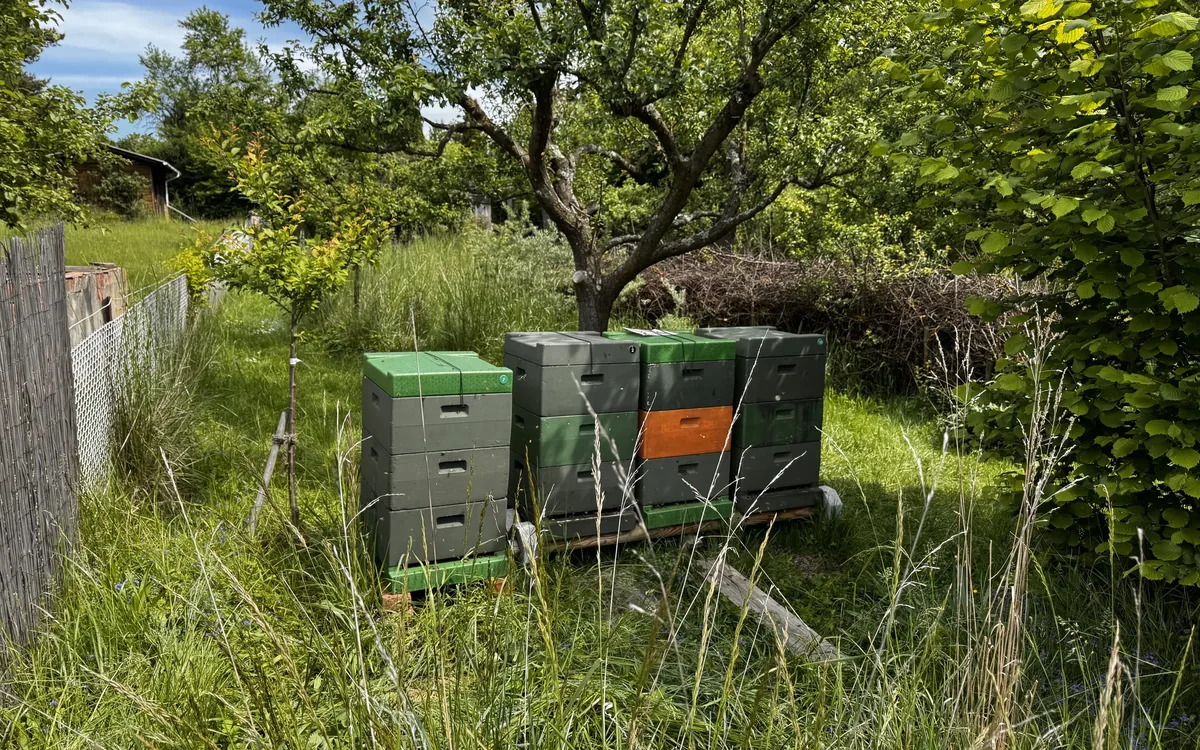
Urban green space has to work too
A park can be generously green yet contain few flowers or nesting opportunities. Sealed surfaces and intensive maintenance can further limit usable areas. In its Urban Pollinators Project, the University of Bristol studied different urban spaces and worked with local authorities and conservation partners on improvements. Meadows, gardens, parks and roadside verges were among the areas considered.
In practice, this means looking more closely than simply noting the colour green. Are there flowering plants in different seasons? Are suitable nesting structures retained? Are small areas distributed so that they can complement one another? Adding a honey bee colony does not answer these questions. Supporting wild species begins with their resources. Depending on the place, suitable flower-rich areas, different mowing or preserving an existing nesting site may be the more useful practical measure.
A walk with better questions
To make your own comparison, begin with two familiar places: perhaps an urban garden and a path on the edge of a village. Revisit both during the season in weather as similar as possible. Note flowering plants, recognisable visitors and possible nesting features. Keep observation separate from interpretation. Few visits on a cool morning can have many explanations.
The question of the better place becomes more concrete in this way. Perhaps the garden offers late-summer food while the meadow retains distinctive plants and ground-nesting sites. Perhaps both lack exactly the same bridge after spring flowering. Such a walk does not replace a standardised scientific survey. It does train the eye for differences that a sweeping judgement would hide. And it reveals possibilities worth discussing with gardeners, land managers or a conservation group.
The most important connection lies in between
Urban gardens and rural habitats are not separate worlds. They meet directly at settlement edges. A flowering margin can adjoin orchards, an old wall a meadow, a stream allotments. Improving the surroundings therefore calls for thinking beyond property boundaries.
A shared flowering calendar, coordinated management or preserving a few permanently undisturbed features can strengthen these connections. At the same time, distinctive habitats and their specialised species deserve protection in their own right. An arbitrary colourful flower bed cannot simply replace them. The more productive question is therefore: what can this particular place contribute, and what is missing nearby? Good answers improve bees’ prospects. Whether the next sign says “town” or “village” is only part of the story.
Sources & further reading
- Theodorou et al. (2020): Urban areas as hotspots for bees and pollination but not a panacea for all insects
- Universität Halle (2025): Insekten-Oasen in Städten – Studie zu Stadtbrachen und Schutzgebieten
- University of Bristol (2024): Gardens reduce seasonal nectar gaps for farmland pollinators
- LfL Bayern: Wildbienen in der Kulturlandschaft
- University of Bristol: Making cities more pollinator-friendly – Urban Pollinators Project