

Pollen with a biological purpose
In flowering plants, pollen forms in the anthers, at the ends of the stamens. What we recognise as fine dust consists of individual pollen grains. They are not ready-made seeds. They carry the male contribution to the plant’s sexual reproduction. For a pollen grain’s journey, the essential thing is to reach a suitable stigma: the part of a flower that can receive pollen.
Not every flower is built in the same way. Some have both stamens and female floral organs. Others bear separate male and female flowers, either on the same plant or on different plants. The routes between them can therefore be very different. Look closely at an apple blossom and you can already discover some of this architecture. What looks from a distance like no more than a pale cluster of blossom contains the starting points and possible destinations of countless tiny journeys.
The bee comes for food
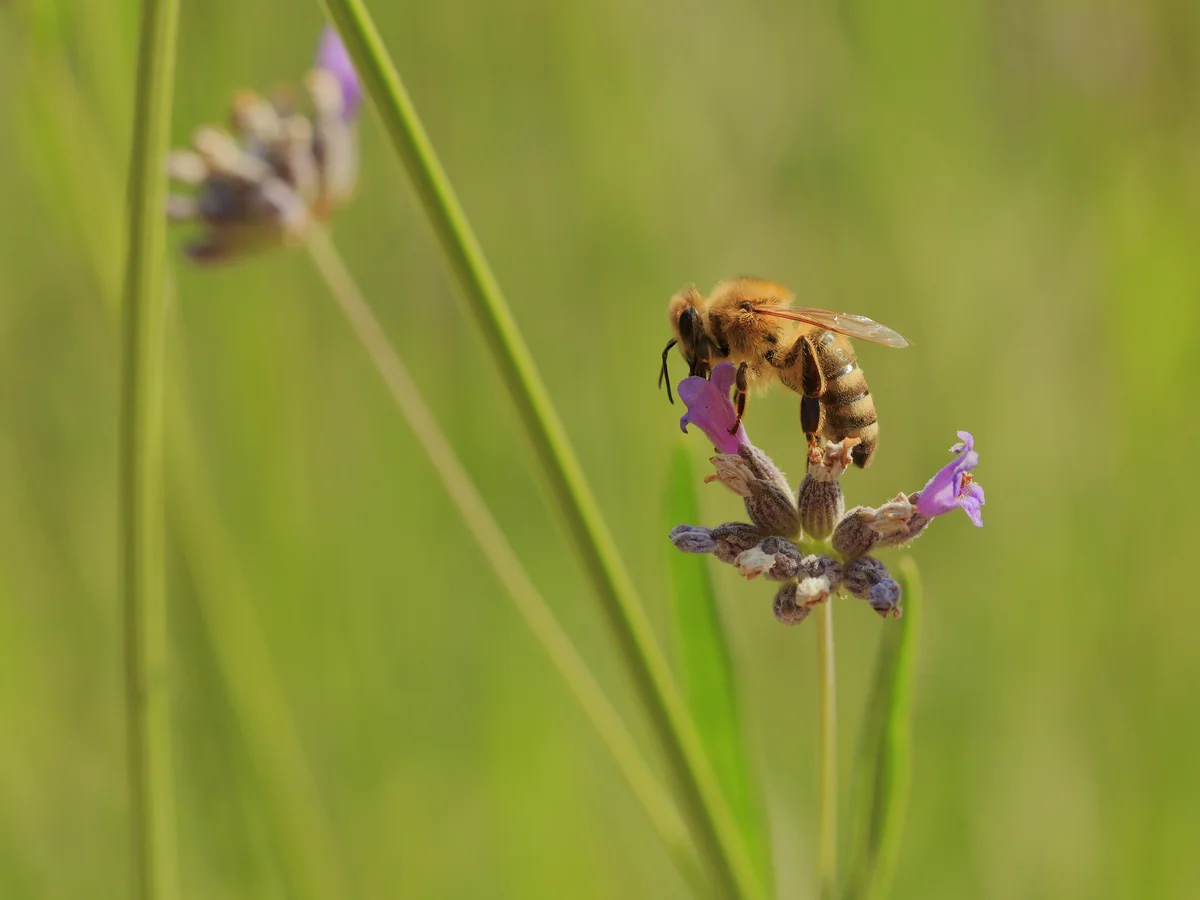
For a bee, pollen has a second significance: it is food. Among other things, it provides proteins and fats that are important for development and reproduction. Nectar, by contrast, is a sugary liquid and a major source of energy. In a honey bee colony, collected nectar can become honey. Pollen and nectar are therefore both associated with flowers, but serve different purposes. Not every flower offers both.
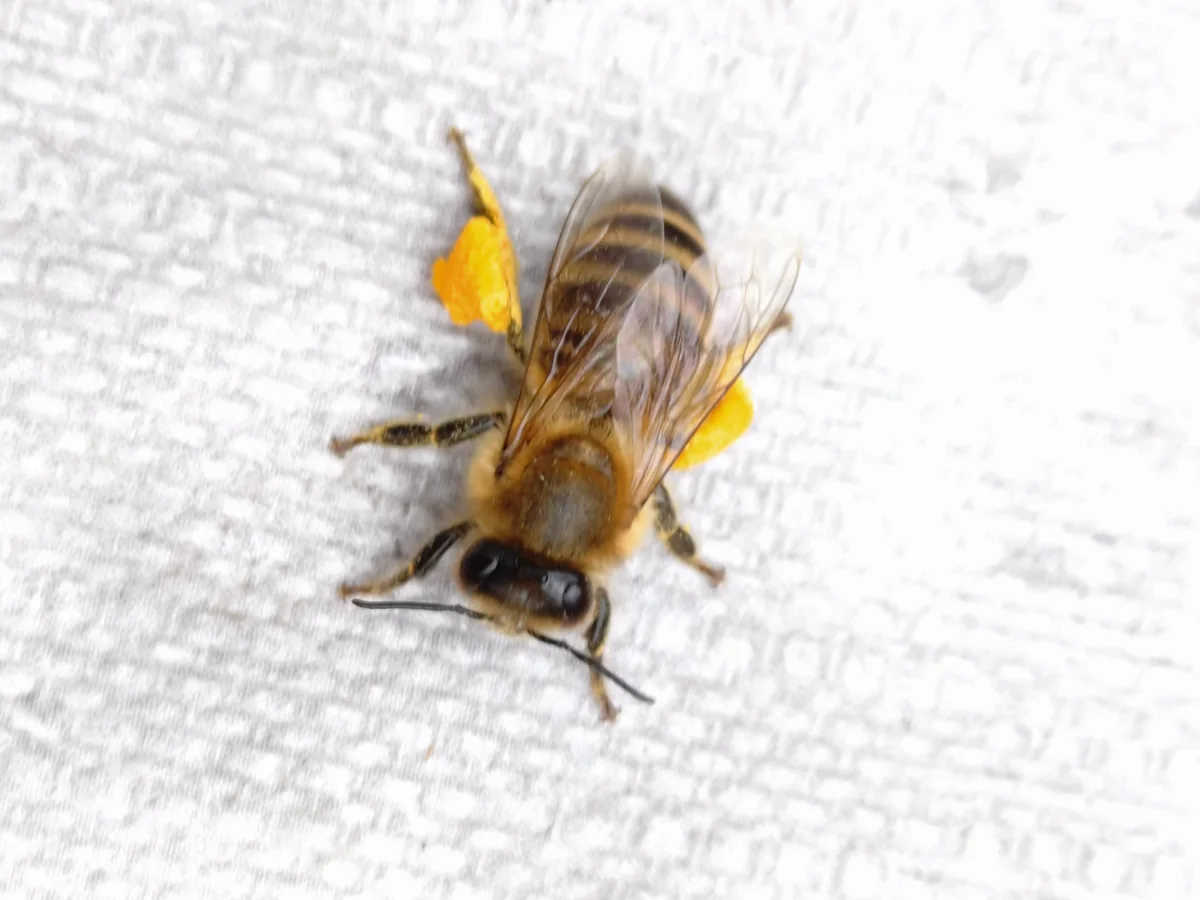
On honey bees, collected pollen often stands out as a compact parcel on the hind legs. Other pollen remains loosely attached to the body and can be passed on at the next encounter with a flower. For pollination, what counts is what actually reaches a suitable stigma. The visible size of a pollen parcel therefore does not show how successfully that visit pollinated the plant. The nutritional value of pollen also differs between plants. A varied landscape offers different food sources, supporting more than a single kind of foraging trip.
The contact that matters
In flowering plants, pollination initially means the transfer of pollen to a stigma. A bee can make this connection when she touches the relevant parts during a flower visit. She does not need a plan for plant reproduction. While looking for food, her body can pick up pollen and release it again. The contact between animal and flower connects two processes of life.
Pollen can be transferred within a flower, between flowers on the same plant or between different plants. Whether seeds can later form depends, among other things, on the plant species and the compatibility of the pollen. Some plants can use their own pollen; others require suitable pollen from another plant. Landing on just any flower is therefore not enough. A pollen grain on the wrong plant species or an unreceptive stigma has not reached its destination. A flower visit is an opportunity for pollination, not a guarantee of success.
After pollination, the journey continues
A suitable pollen grain can germinate on a receptive stigma. It forms a pollen tube that grows towards an ovule. Male reproductive cells travel through this tube. Only the fusion of one of these cells with the egg cell constitutes fertilisation. Pollination brings pollen to the starting point of this process; fertilisation is a later step inside the flower.
In flowering plants, a second fusion also takes place, producing nutritive tissue for the developing embryo. Botanists therefore speak of double fertilisation. A fertilised ovule can become a seed; in many species, the ovary develops into the fruit or part of it. By then, the bee has long since flown on. What her visit helped to make possible continues to grow without her. A seed holds the possibility of a new plant, but it too needs suitable conditions before it can germinate.
What finds its way onto our plates
In many fruit and vegetable crops, adequate pollination affects fruit set and the quality of the harvest. Apples, pumpkins and berries are familiar examples. For an apple tree, it is not enough simply to have many animals on the wing. Suitable pollen must reach receptive flowers while they are in bloom. Depending on the crop and variety, insufficiently pollinated flowers may produce fewer fruits, or fruits that are small and irregularly developed.
Even so, not every food depends directly on a visit from a bee. Cereals such as maize are wind-pollinated; with potatoes, we harvest tubers rather than fruits. Some plants can also form fruits without prior fertilisation. These differences matter when we discuss the importance of pollinators. Their contribution needs no story of plates suddenly left empty. It can be seen in many particular fruits, in seed formation and in the diversity of what we grow and what grows in the wild.
Some flowers need a powerful impulse
You can observe a special technique on a tomato flower. Bumblebees hold onto the flower and vibrate their flight muscles. The vibration releases pollen from the anthers. This technique is known as buzz pollination. The brief change in buzzing sound accompanies physical work on the flower that differs from an ordinary approach.
Tomatoes are usually self-compatible: pollen from the same flower can be suitable for fertilisation. First, however, it must be released and transferred. Movement caused by wind can help too; bumblebees can make an effective additional contribution through vibration. Self-compatibility therefore does not automatically mean that every necessary contact happens without outside influence. This example shows why different flowers and different visitors need to be considered together. Size, posture and the way an animal forages all help determine whether it can make an effective connection with a particular flower.
A landscape needs different visitors
Honey bees contribute a great deal to pollination. Bumblebees, other wild bees and further flower visitors also have important roles. Research in apple orchards in Saxony-Anhalt illustrates this: where oilseed rape flowering at the same time attracted honey bees, they visited fewer apple blossoms. At the sites studied, bumblebees and other wild bees apparently made up for this shortfall. Apple formation remained similar to that in orchards without nearby oilseed rape.
This finding does not mean that one group can replace another everywhere. It demonstrates the value of several pollinators sharing a landscape. For wild bees, the brief period of fruit blossom is not enough: they also need suitable food before or afterwards, and places to nest. Anyone wishing to help pollen along its journey therefore needs to look beyond a single flowering tree. The ground beside it, the hedge at the edge and flowers that open later in the year are all part of the picture.
A small experiment in looking closely
Choose an easily accessible flower with visible stamens. Watch a visitor from a calm distance: does its body brush the anthers? Does it also reach the stigma? Is it seeking nectar deep inside the flower, or working on the pollen-bearing parts? A short video can help you slow down the movement afterwards. Leave both flowers and animals undisturbed.
Then note the plant species, date and behaviour you observed. You do not need an exact identification of the animal to begin. With the naked eye, you will see neither a pollen tube growing nor an egg cell being fertilised. But you can discover the point where two life stories meet. Return to the plant later and see what has become of its flowers. Between the first visit and the seed lies a story larger than the tiny grain of dust with which it began.
Sources & further reading
- Universität Heidelberg und Universität Regensburg (2014): Doppelte Befruchtung bei Blütenpflanzen
- USDA, S. E. McGregor: Insect Pollination of Cultivated Crop Plants – Bestäubung und Befruchtung
- US Forest Service (2025): Bee nourished – Pollennahrung und Blütenwahl
- University of Minnesota Extension: Welche Obst- und Gemüsearten Bestäuber brauchen
- University of Maryland Extension (2023): Tomato Pollination and Bumblebee Visits
- UFZ und Universität Halle (2021): Wildbienen sichern Apfelbestäubung bei gleichzeitig blühendem Raps
- University of Minnesota: The Science of Plants – Flower Morphology