

Read the balcony before choosing the plants
How long does sunlight fall on the pots? Does it get hot beneath the roof, or does wind dry out the soil? Observations like these are the starting point for a useful choice of plants. A plant constantly struggling in its position will not contribute much as a food source either. The direction the balcony faces offers guidance; neighbouring buildings and overhanging roofs can greatly change the actual conditions.
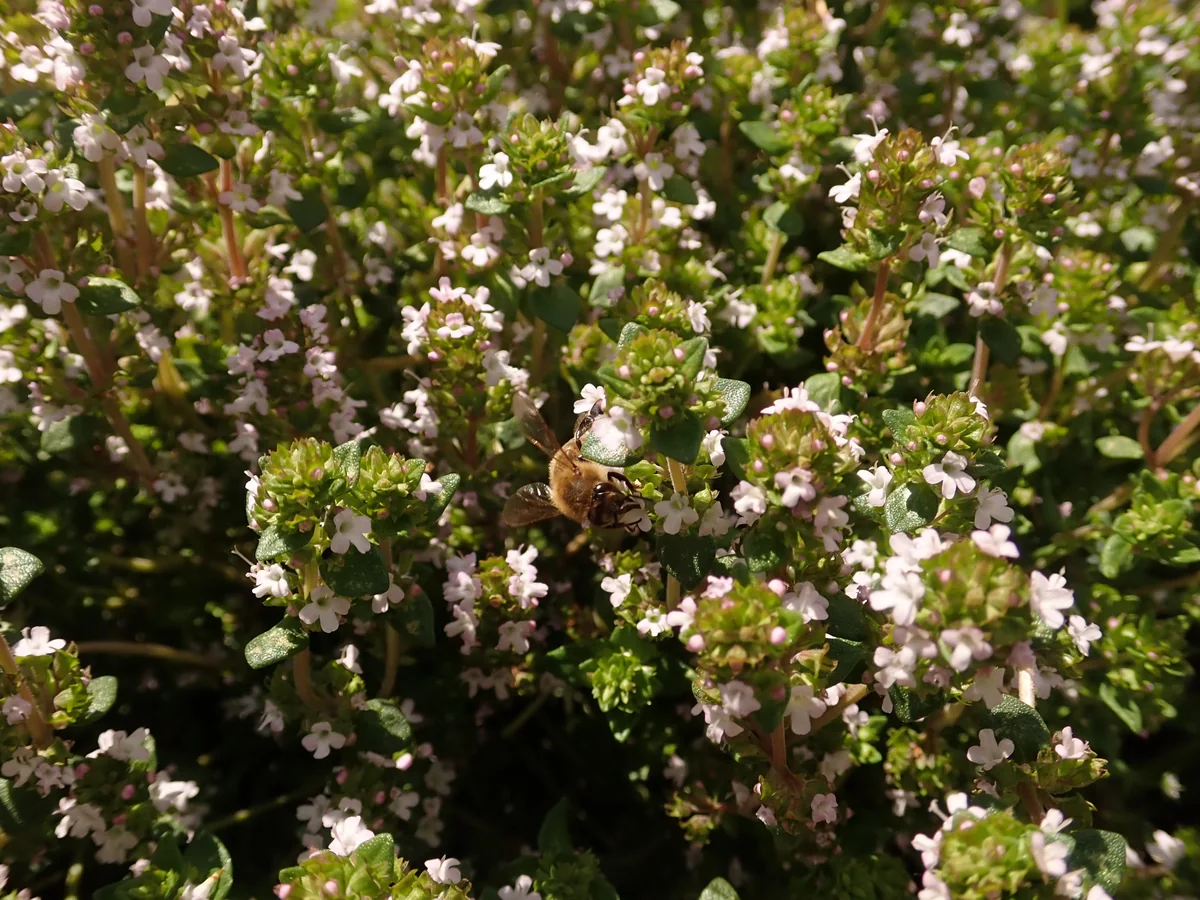
Thyme, wild marjoram and meadow clary are options for sunny places. Lungwort, spotted dead-nettle or hedge woundwort may suit light shade. Within this selection, choose according to space, moisture and mature size. A vigorous plant in a container needs more root space than a small species suited to a window box.
A flower must have something to offer
A flower may please us while holding little for a bee. In highly double cultivars, some stamens have been transformed into petals; pollen and accessible nectar may be absent. Native wild perennials with their natural flower shapes are therefore a good foundation. Different plant families help provide for different visitors.
The kitchen can join in too: let some chives, sage, thyme or oregano flower. Other shoots remain for our own harvest. Bellflowers, bird’s-foot trefoil and knapweeds extend the offering beyond the usual herb pots. Particularly specialised wild bees need specific pollen sources. An arbitrary colourful flower mix does not automatically cater for these species.
Plan for the gaps between flowers
A balcony in glorious bloom at the time of purchase can be almost flowerless a few weeks later. A small succession of different flowering times is more helpful. Lungwort can open the spring; thyme and meadow clary in sunny positions take over later, while wild marjoram and musk mallow can extend into late summer, depending on the season. Flowering dates are guidelines, since weather and location also play a part.
During a season, note when something actually flowers. If a gap appears in June, plant specifically to fill it. Group plants with similar water needs together. This keeps the plan manageable and turns the attractive moment of planting into a longer-lasting resource. Our flowering calendar helps you think further.
Good care keeps the food island open
Use sufficiently large containers with drainage and a peat-free growing medium suited to the plant. Drought-tolerant wild perennials need free-draining soil; shade plants may have different requirements. A planter remains a confined root space. Check moisture even for species that need little care in a garden, while also preventing persistent waterlogging.
Perennial plants can stay. In winter, leave suitable dry stems and seed heads standing rather than cutting everything back immediately. If you add a small nesting aid, it needs appropriate materials, secure attachment and protection from rain. Occupied nesting tubes stay outdoors in their familiar location. Our report on good wild bee nesting aids explains how these provisions work.
Offer water with safe places to land
A shallow dish can provide an additional water source on hot days. Rough stones or small pieces of wood projecting above the water give animals a foothold. Place the drinking station out of the wind and somewhere you can reach easily. A deep bowl with no way out is unsuitable. Check regularly that there is water and safe, dry landing space.
Change the water and clean the container thoroughly; in hot weather, this is a daily task. Fill the dish with plain water. Sugar water or honey cannot replace flowering plants and do not belong in a permanently provided balcony drinking station. The most important food supply continues to come from flowers and reliable care of the plants.
Let the visitors help you plan
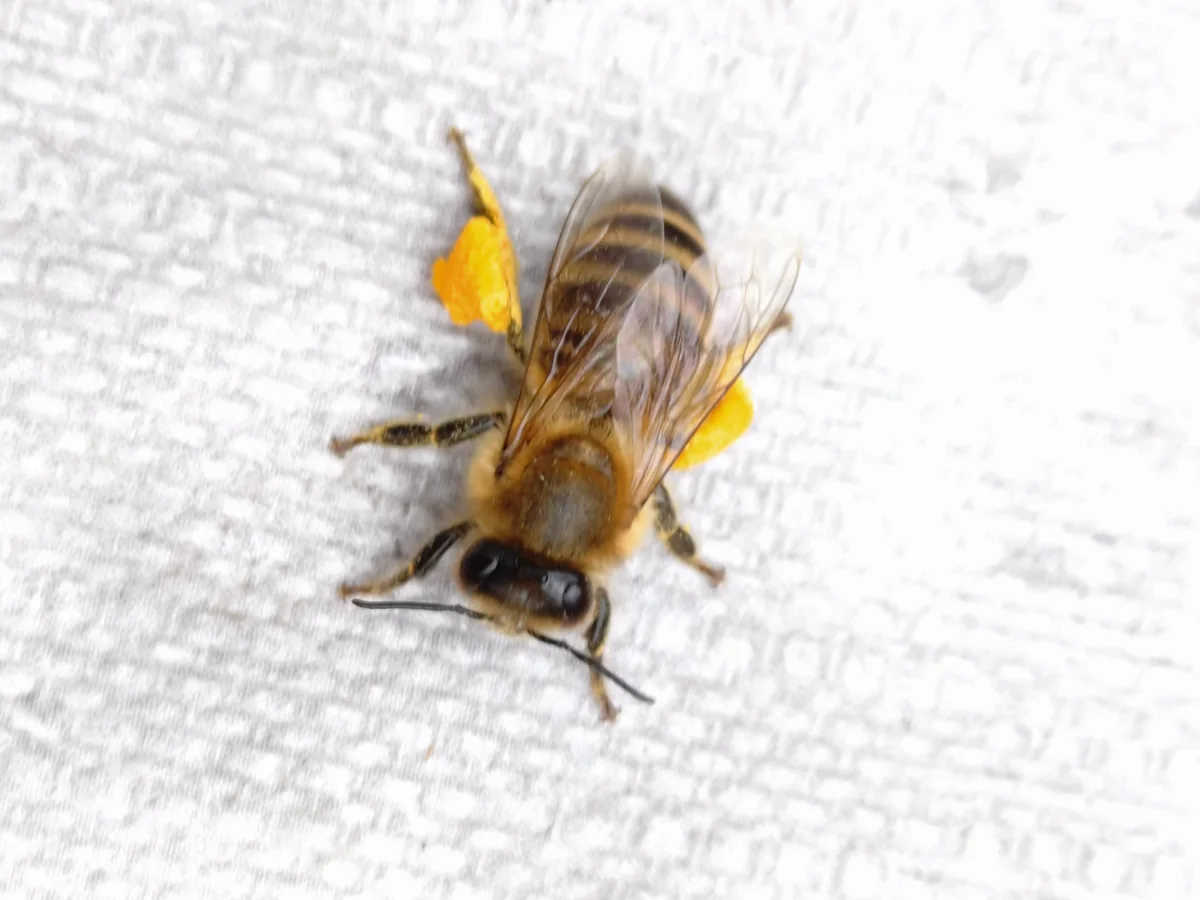
Occasionally take a few quiet minutes to watch a single plant. Do small, almost hairless bees arrive, sturdy bumblebees or honey bees? Are they collecting pollen or looking for nectar at the base of the flower? Not every visitor can be identified immediately. Photographs taken from a little distance and dated notes help put your observations in context later.
A balcony cannot replace a species-rich landscape. But it can supplement food and encourage attention. Perhaps one planter becomes two next year; perhaps neighbours join in with more native plants. A denser network of little resources then develops between windows, courtyards and front gardens. And the place for morning coffee gains another meaning: a front-row seat for life outside your door.
Sources & further reading
- Deutsche Wildtier Stiftung: Wildbienen auf Balkon und Fensterbank fördernPlants suited to north-, south-, east- and west-facing balconies; flowering herbs and specific pollen sources.
- BUND Naturschutz: Bienenfreundliche BalkonpflanzenPlant species with preferred locations and flowering times; single flowers and as continuous a food supply as possible.
- WWF Schweiz: Lebendige Balkone und Gärten mit Wildbienen und Wildblumen (PDF)Planting containers, drainage, peat-free growing medium and overwintering occupied nesting aids.
- BUND Naturschutz Regensburg: InsektentränkeShallow water source with projecting natural materials; regular water changes and cleaning.