
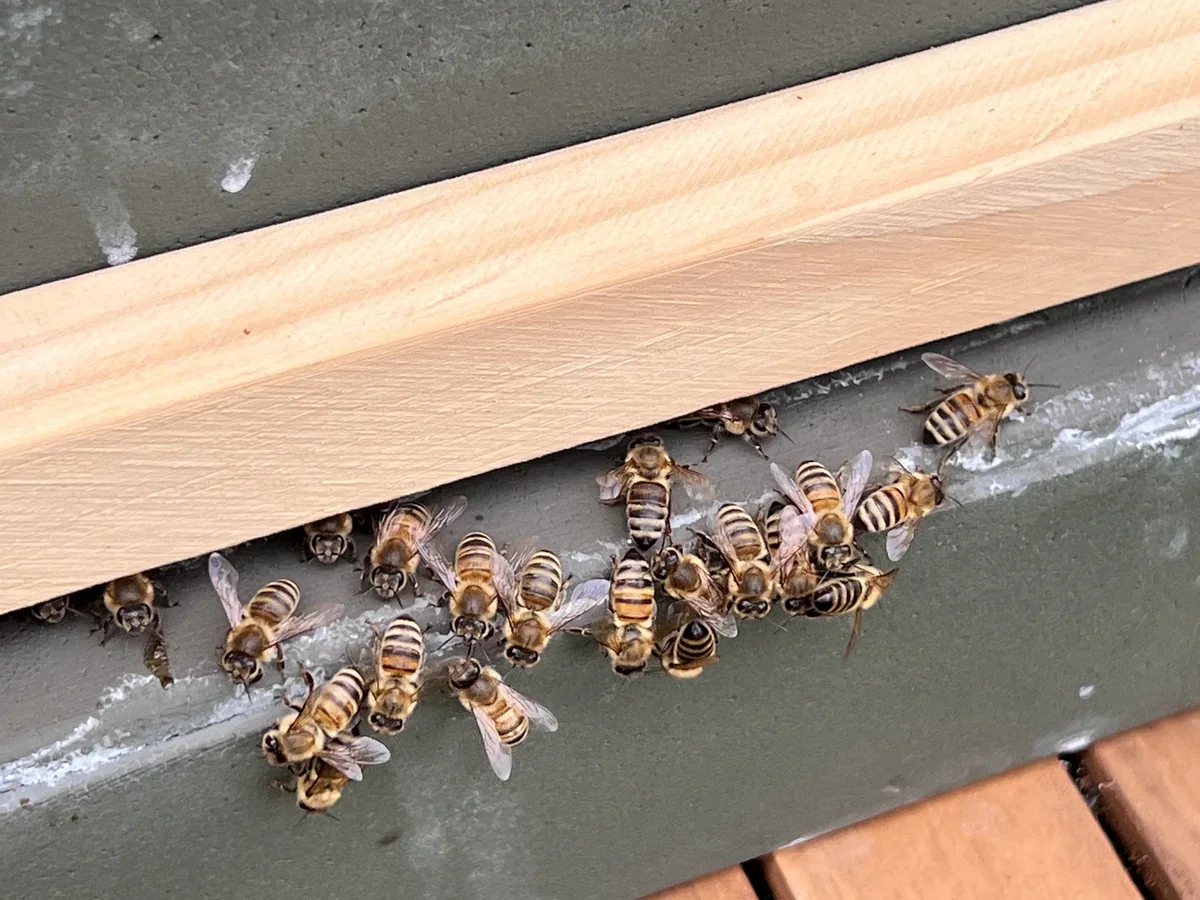
More is at stake at the hive entrance
In a honey bee colony, brood, food stores and the future of many thousands of animals lie close together. For an intruder, the nest can be a rich source of food. Workers at the entrance therefore check what approaches. A vibration, movement or unfamiliar smell is perceived here in a different context from out on a flower.
A forager there is primarily seeking food. She does not fly at people to hunt them. But if she becomes trapped between skin and clothing or pressed beneath a foot, she may defend her body. The location and immediate circumstances explain more than labelling a bee supposedly always peaceful or inherently aggressive.
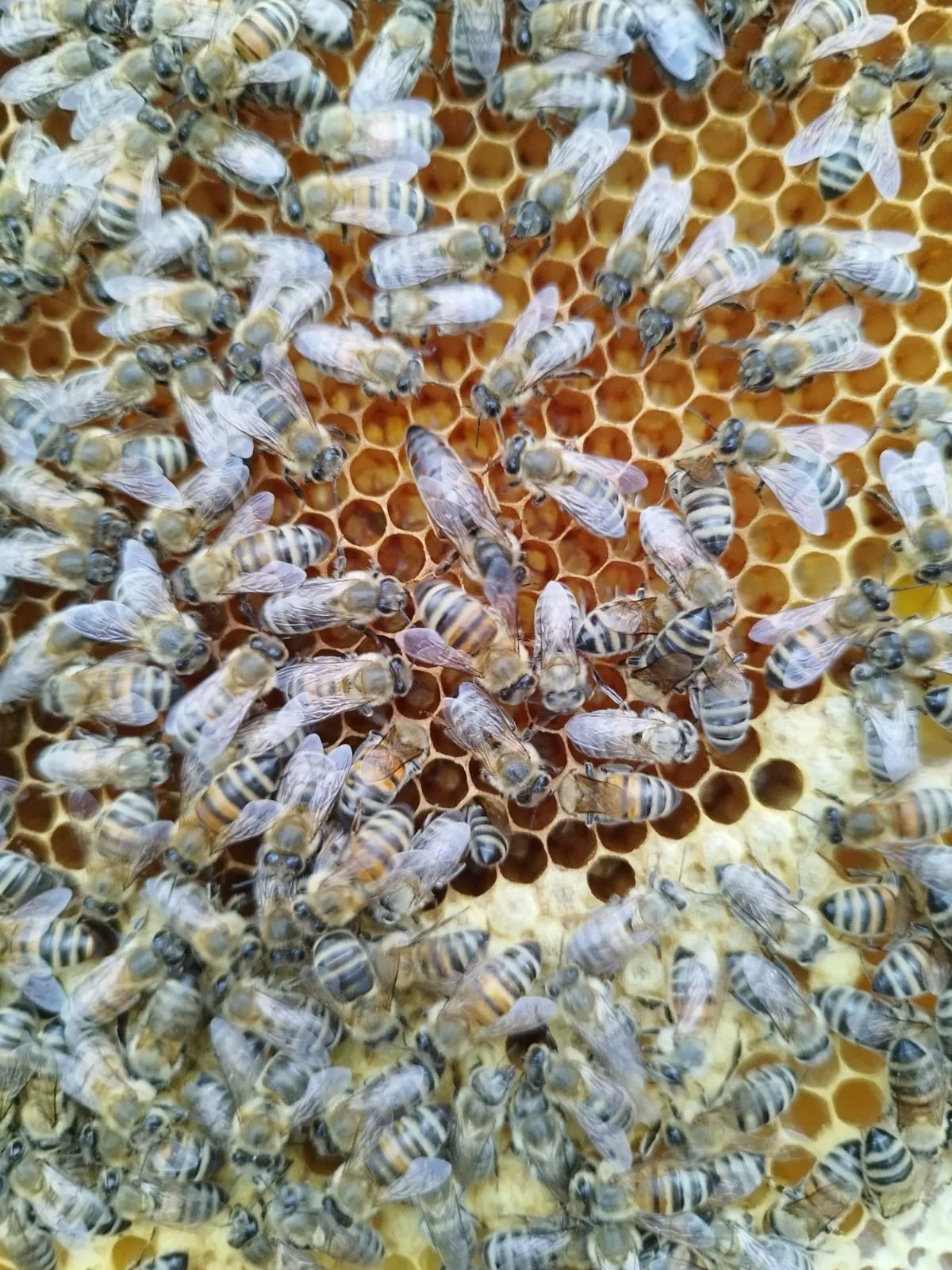
A sting is female anatomy
The venomous sting evolved from the original egg-laying apparatus of female ancestors. Male bees do not possess one. A drone may buzz loudly and look impressive, but he cannot sting. Honey bee workers, by contrast, are females and carry a sting. Bumblebee queens and workers can also sting; male bumblebees cannot.
Life is organised differently among the many solitary wild bees. Each female provides for her own brood; there is no workforce defending the nest together. Stings from these species are extremely rare and occur mainly when the individual animal is directly threatened. Busy activity in front of several neighbouring nesting tubes therefore does not automatically mean that a defensive colony lives there.
When a scent reaches the others
A honey bee colony’s defence also depends on chemical communication. Alarmed guards can raise their abdomens and release alarm pheromones. These scents alert further workers to the disturbance. The reaction of a few animals can thus develop into collective defence. The queen does not need to give an order.
Isoamyl acetate is one component of the alarm scent. This scent communication helps explain why an established defensive situation can encourage further stings. At the apiary, distance then matters more than trying to drive away an individual bee with your hands. Calm movements, experience and suitable protective clothing are essential when tending colonies; an opened hive is no place for spontaneous tests of courage.
Why a sting can cost a worker her life
A honey bee worker’s sting has barbs. It can become lodged in the elastic skin of a person or another mammal. When the bee pulls away, the sting apparatus is torn from her abdomen. The severe injury causes her death. The apparatus left behind can initially continue delivering venom.
Even so, the familiar statement that bees die after every sting goes too far. It primarily describes this encounter between a honey bee worker and mammalian skin. Bumblebees can usually withdraw their sting and sting repeatedly. Nor can all other bees be reduced to the fate of a honey bee worker. An entire group of animals does not fit into the story of a single sting.
Calm begins before the encounter
Keep arrival and departure routes clear at the hive entrance. Do not shake or open nests, and avoid blowing forcefully towards them. If bees become noticeably defensive, withdraw calmly from the immediate area. Swatting and frantic waving can worsen the encounter. You can increase your distance without touching the animal.
On a flower meadow, sturdy footwear helps prevent accidentally stepping on a bee. A bee inside a sleeve needs room to escape, not pressure on the fabric. When eating and drinking outdoors, it is worth looking inside the container, particularly if it is opaque. Small habits like these avoid situations in which a person and an insect suddenly come much too close.
If it does happen
Remove a lodged honey bee sting as soon as possible, for example by scraping it sideways with a fingernail without squeezing the venom sac. Afterwards, a cool, damp compress can ease the discomfort. Pain, redness and limited swelling around the sting site are common. Medical advice is sensible if symptoms are unusually severe or persistent.
Call 112 immediately for breathing difficulty, circulatory problems or swelling in the mouth or throat. An allergic reaction with symptoms beyond the sting site also warrants an emergency call. A sting in the mouth or throat requires prompt medical assistance because of possible swelling. If you have a prescribed emergency kit, use it according to your personal emergency plan; a prescribed adrenaline auto-injector must not be delayed when the relevant symptoms occur. A reaction extending beyond the sting site should subsequently be assessed by an allergy specialist.
Sources & further reading
- University of Minnesota Bee Lab: Wasp and Bee RemovalDefence of the body and nest; differences between honey bees, bumblebees and ground-nesting wild bees.
- Utah State University Extension: Misconceptions About Bees (2026)Female origin of the sting, stingless males, and barbs and consequences of stinging in honey bee workers.
- Gage et al. (2018): Smoke Conditions Affect the Release of the Venom DropletResearch paper on defence and chemical alarm communication; the experimental effects of smoke are not generalised in this article.
- LAVES, Institut für Bienenkunde Celle: Bienen- und Wespenstiche – Ursachen, Risiken, Schutz (PDF)Biological context of rare stings by solitary species and behaviour around nests. Medical information in the article follows the IQWiG sources.
- IQWiG: Insektengiftallergie – Kurz- und langfristige BehandlungPrompt sting removal, cooling and prescribed emergency medication.
- IQWiG: Anaphylaktische Reaktion nach InsektenstichenWarning signs of a severe allergic reaction, emergency number 112 and medical assessment.