
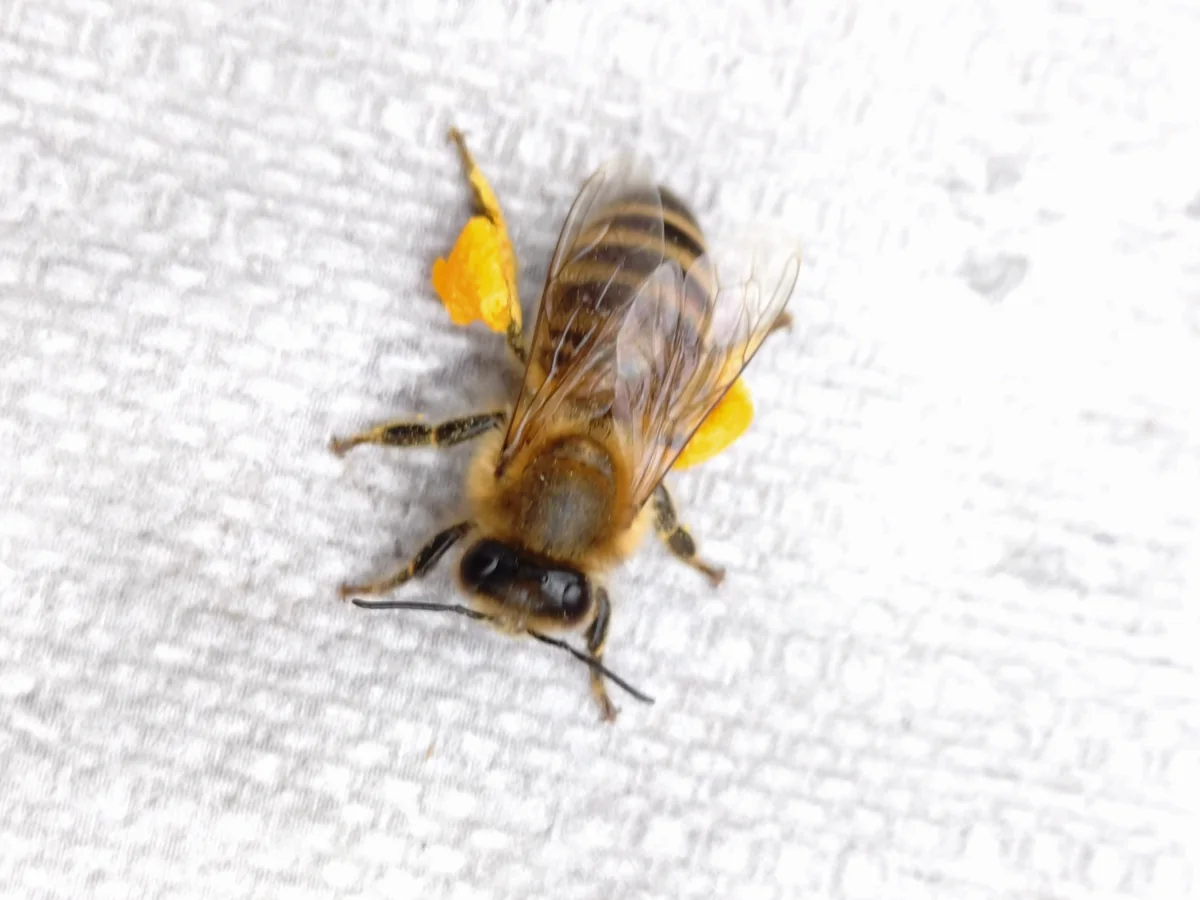
A preference for this foraging trip
Flower constancy describes a flower visitor’s tendency to stay with a particular flower type during a sequence of visits. The term describes behaviour in a situation. It does not mean that a honey bee visits only one plant species throughout her life. She can later discover and use other sources. Different foragers within a colony can also visit entirely different plants at the same time.
The flowering landscape and the individual bee therefore need to be considered separately. A colony can gather food from many plants overall while an individual worker is foraging with remarkable constancy at that moment. Nor does every observed instance of constancy have the same cause. If almost only one plant species is flowering within reach, there is little choice. Behaviour becomes especially revealing where genuine alternatives are available.
Familiar flowers have a head start
A flower presents a bee with a task. She must detect it, land on it and reach the food. Different flower shapes require different movements. Colour, scent and form can become associated with a reward. An experienced forager therefore does not start entirely from scratch on her next visit. She brings memories that can make searching and handling easier.
This familiarity is one possible advantage of consistent foraging. Yet explaining flower constancy solely through a supposedly tiny memory would be too simple. Bees can learn several kinds of information. Researchers instead discuss an interplay of learning experience, signal processing and the costs of switching. Not everything an animal could in principle learn needs to be equally useful during a particular foraging trip.
What artificial flowers make visible
To test choices, researchers often use artificial flowers with controllable colours and sugar solutions. In experiments by Hill and colleagues, individual honey bees became strikingly constant to one of two available colours. Some scarcely tried the other colour, although it was available. The study shows how strongly a sequence of visits can narrow onto a familiar signal.
But artificial flowers are a tool, not a whole meadow. Researchers can alter colour, distance and food quantity separately; outdoors, these features act together. Experimental design, prior experience and the bees studied also differ. Precisely for these reasons, one experiment is no proof that all honey bees forage the same way under all circumstances.
Constancy responds to whether a visit pays
A study by Grüter and colleagues in 2011 examined the size and concentration of rewards more closely. After small, ecologically realistic food rewards, subsequent constancy depended on the quantity and concentration of sugar solution the bees had previously received. The number of rewarded experiences also played a part. More rewarding experience strengthened attachment to the learnt colour.
This is an important addition to experiments in which differences in food seemed to change little. If rewards are already very large, a further increase can produce scarcely any greater constancy. When behaviour is close to its maximum, differences can easily disappear. A bee is therefore neither a completely rigid repeater nor a calculating agent with a full overview of every flower. She chooses using the experience she actually has.
The route between two flowers matters too
Flowers do not stand on a chessboard. Some grow close together; others require a longer flight. An early experiment by Marden and Waddington showed that spatial arrangement can change choices. At equal distances, honey bees often remained constant to one flower colour. At unequal distances, however, they frequently chose the nearer flower.
Anyone wishing to understand foraging must therefore look at the spaces between flowers too. A familiar flower can be attractive, but its advantage sits alongside the effort needed to reach it. From our perspective, the garden is an area of colours. For a flying forager, it is also a network of distances, accessible rewards and already familiar tasks. The next visit arises from more than a preference.
For plants, repetition is often a benefit
For pollination, suitable pollen must reach a receptive stigma. When an animal visits flowers of the same plant species in succession, the chance increases that the pollen it carries reaches a suitable next flower. This is the obvious advantage of flower constancy for many plants. Transport becomes more directed, although the bee herself is seeking food.
Even so, a visit must not be equated with successful pollination. Among other things, it matters whether the body touches the relevant floral parts and whether suitable pollen is transferred. Nor does a long sequence of visits tell us anything certain about subsequent seed set. The flower makes an offering; what follows depends on the actual contact. The detailed journey of a pollen grain begins precisely here.
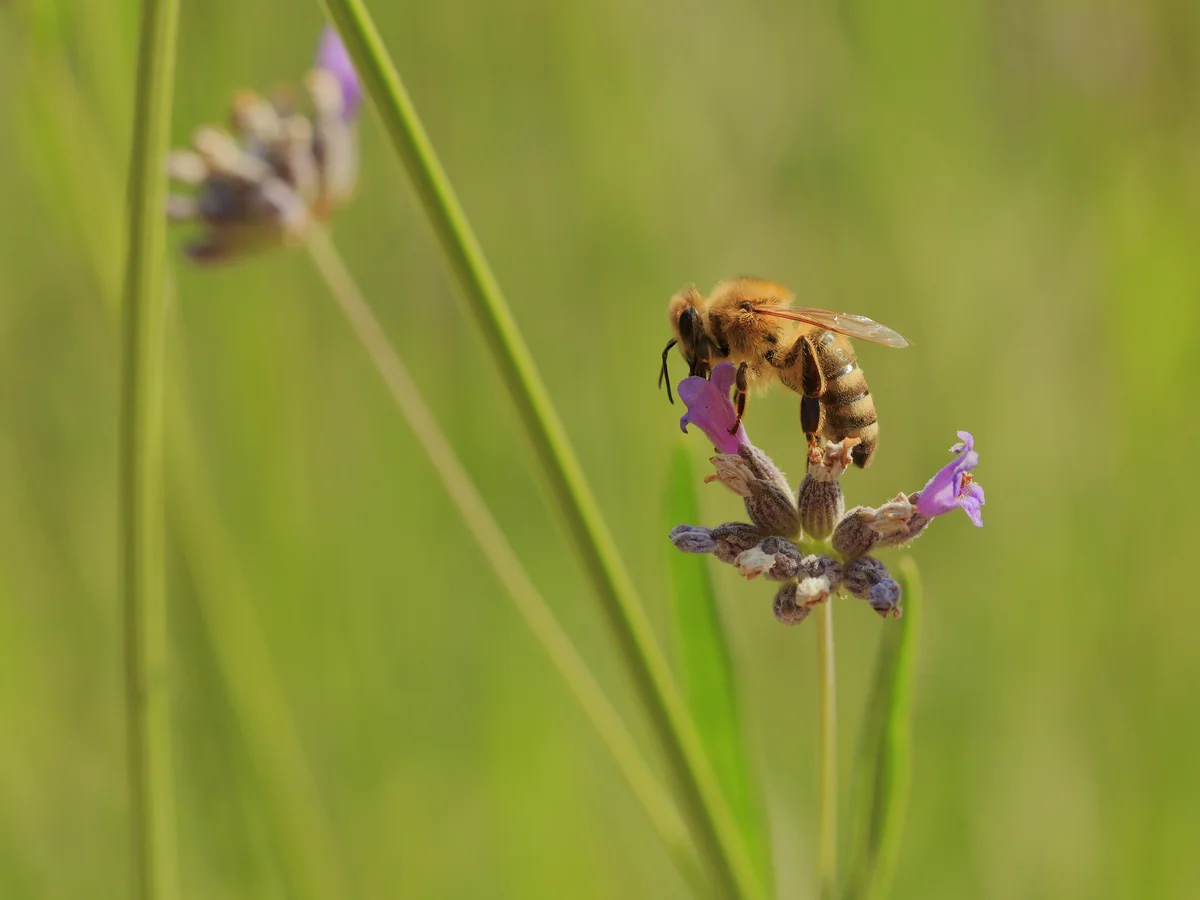

A little meadow becomes an observation notebook
Choose a place with two easily distinguishable flowering plant species and follow a single bee with your eyes. Note her next ten clearly visible landings. Does she switch between species or stay with one? How far apart are the flowers she visits? A sketch of the area helps distinguish simple frequency from actual choice. Recognising one animal among many similar ones places limits on this small observation.
Repeat it with other bees and at another time. This does not produce scientific proof, but it does sharpen your attention. Perhaps one forager remains remarkably constant while the next takes different routes. Behind the repetition lies no vow of loyalty. It is behaviour arising from perception, experience and the particular flowering landscape. For a plant, this little persistence can mark the beginning of its next generation.
Sources & further reading
- Chittka, Thomson & Waser (1999): Flower Constancy, Insect Psychology, and Plant EvolutionResearch review: terminology, sensory and motor learning, possible causes and significance for plants.
- Hill, Wells & Wells (1997): Spontaneous flower constancy and learning in honey bees as a function of colourPrimary study: strong individual colour constancy at artificial flowers under the conditions studied.
- Grüter et al. (2011): Flower constancy in honey bee workers depends on ecologically realistic rewardsPrimary study: food quantity, concentration and the number of rewarded experiences influence constancy.
- Marden & Waddington (1981): Floral choices by honeybees in relation to the relative distances to flowersInvestigation of the influence of distances between flowers on colour constancy in honey bees.
- Çakmak & Wells (1996): Flower Color, Nectar Reward, and the Flower Fidelity of the Caucasus Honey BeePrimary study: relationships between colour signals, food availability and individual choice patterns.