

From wasp-like ancestors to pollen food
Bees belong to the Hymenoptera and are closely related to wasp-like insects. Their ancestors provisioned brood with animal food. Early in bee evolution, pollen replaced this as the main larval food. Nectar supplies energy; pollen provides protein and other nutrients for development. This shift closely tied provisioning offspring to flowering plants.
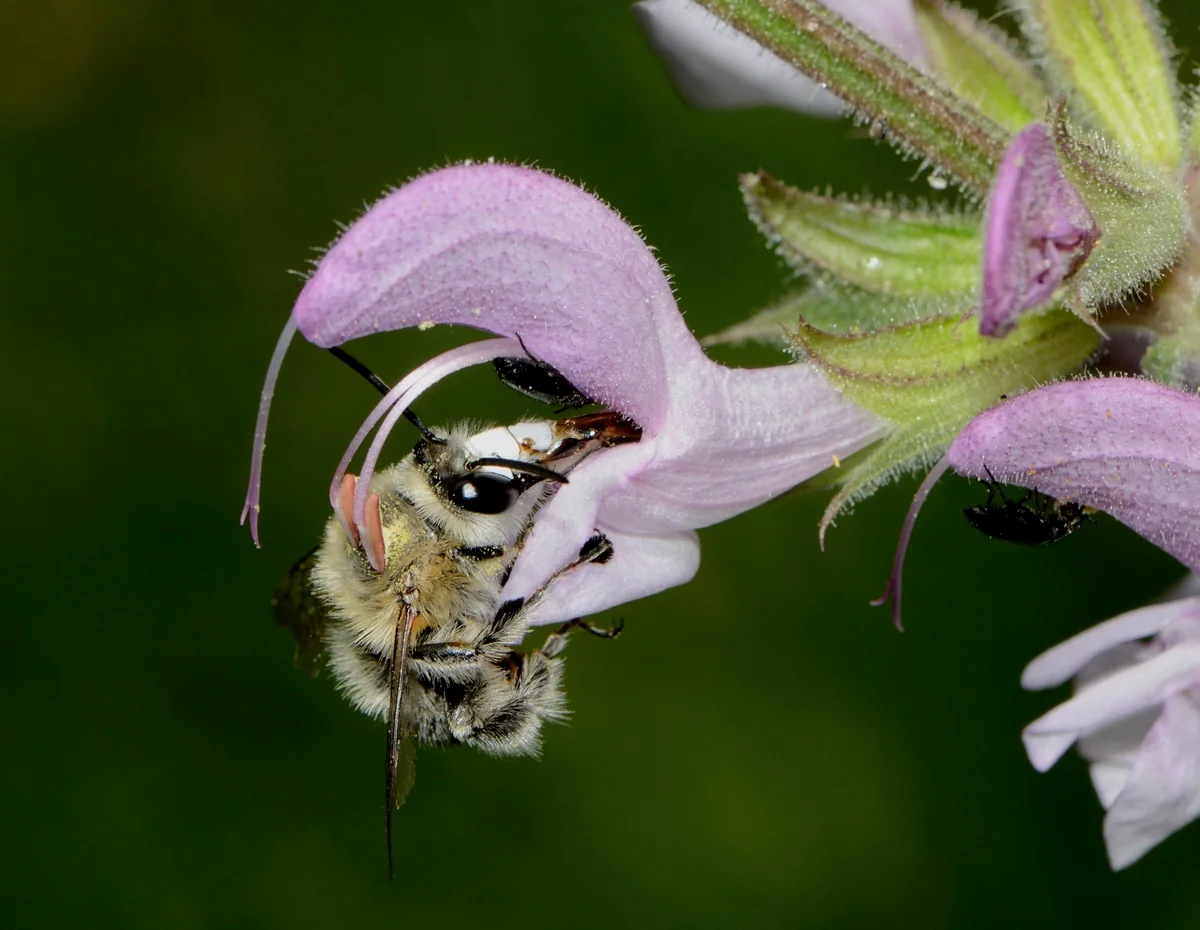
Today, the connection is visible in many body features and behaviours. Numerous bees transport pollen in specialised collecting structures. The precise design varies between groups. Honey bees, for example, collect it on their hind legs; other species carry it in a brush beneath the abdomen. The diversity does not fit a single image of a bee.
A story from the Cretaceous
A large study from 2023 combines genetic data and fossils. Its reconstruction suggests that bees originated in the Early Cretaceous in western Gondwana, the region of present-day Africa and South America before their separation. The researchers place the beginning of this development at approximately 120 million years ago.
Such estimates are reconstructions, not directly observed birth dates. Fossils supply minimum ages for particular groups; genetic comparisons and statistical models help place further branches in time. New finds and different models may change details. The modern honey bee did not yet exist in its present form at that early time.
Two life stories meet
A bee visits a flower to obtain food. Pollen may attach to its body and be carried to another flower. For the plant, this may result in pollination. Flower shape, scent, colour and access to nectar influence which visitors use a plant. Bees in turn differ in body size, tongue length, flight period and foraging behaviour.
This is no consciously negotiated exchange. Over generations, traits successful under the conditions concerned can be favoured. Some relationships are closely specialised; others are open to many visitors. Flies, beetles, butterflies and other animals also pollinate plants. The world of flowers does not belong to bees alone.
A colony is only one possible way of life
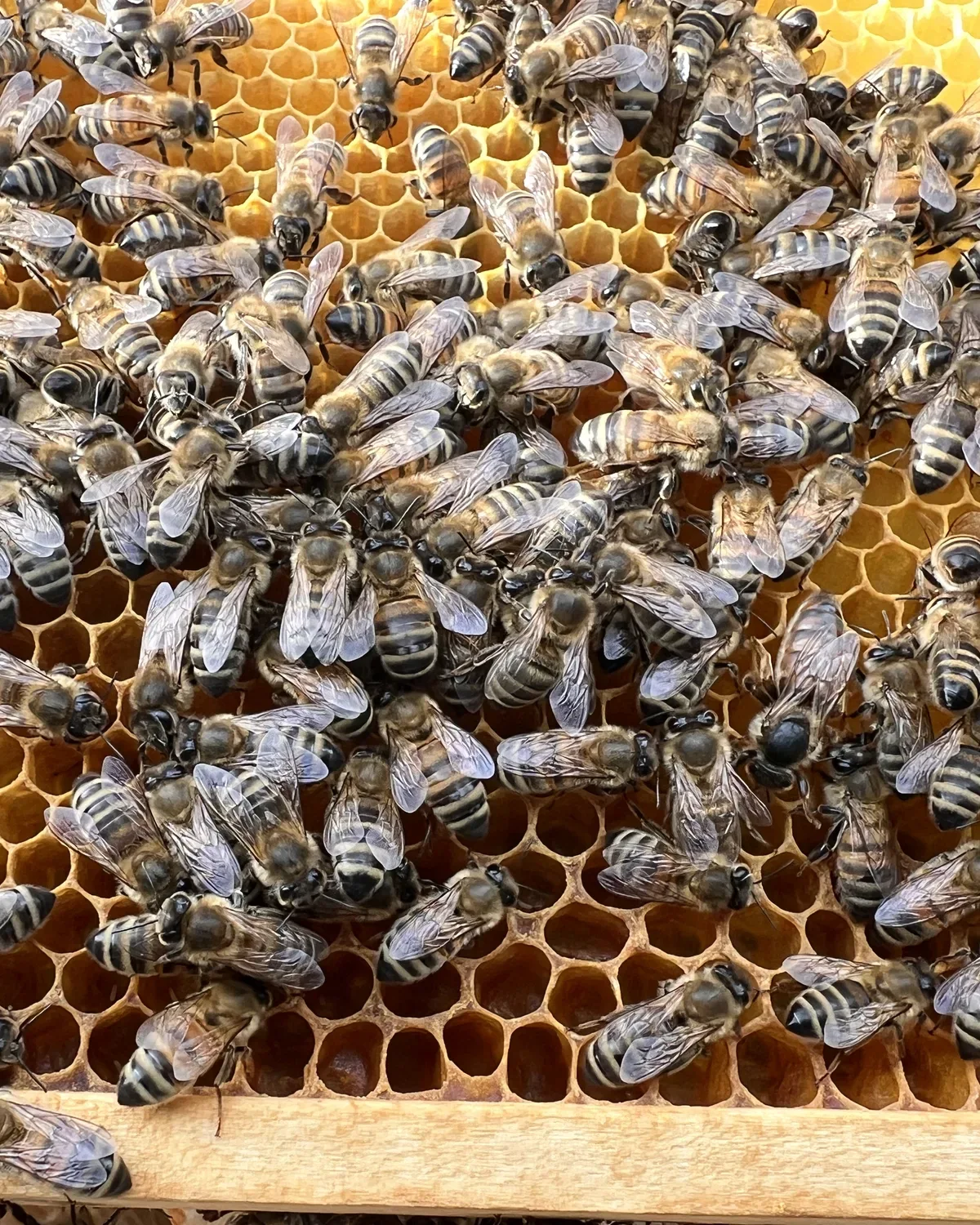
Most bee species do not live like honey bees. In solitary species, one female builds a nest and provisions her own brood. Communal and social forms also exist. Highly developed societies have a reproductive division of labour: queens and workers differ in their roles, and several generations live together.
The evolution of social ways of life is a research field in its own right. Genetic family trees show that different paths to social organisation evolved within bees. Their exact number and sequence partly depend on which groups and traits are examined. Honey bees, bumblebees and stingless bees therefore cannot simply be arranged as rungs on a ladder.
No ladder towards the “perfect” bee
Evolution has no predetermined destination. A mining bee tending her nest alone is not an incomplete honey bee. Her way of life can be successful under her own conditions. A large colony can share food stores and produce warmth; it also needs supplies suited to its size.
This perspective changes conservation too. Protecting only the hive preserves one part of the bee world. Other species need open ground, particular plants or undisturbed stems. The long history of bees remains visible in their diversity today — on a comb as much as on an unassuming flower beside the path.
Sources & further reading
- Almeida et al. (2023): The evolutionary history of bees in time and space (Volltext)
- Danforth et al.: The history of early bee diversification
- Cardinal & Danforth: The Antiquity and Evolutionary History of Social Behavior in Bees
- Woodard et al.: Genes involved in convergent evolution of eusociality in bees
- Cardinal & Danforth (2013): Bees diversified in the age of eudicots