

Give every honey a moment of its own
A few different honeys are enough for a small tasting at home. Prepare them in clean, odour-free glasses or small bowls and note the information on the label. A separate clean spoon for each sample prevents the honeys from mixing. Water between samples, paper and a pen are all the other equipment you need. Strongly scented candles or an espresso drunk immediately beforehand make fine comparisons unnecessarily difficult.
Begin with a small amount and allow yourself time between samples. A practical sequence is to try a subtly scented honey before a strongly aromatic one. This is an invitation to discover, not a formal testing procedure. Later, it is worth reversing the order.
First look, then ask your nose
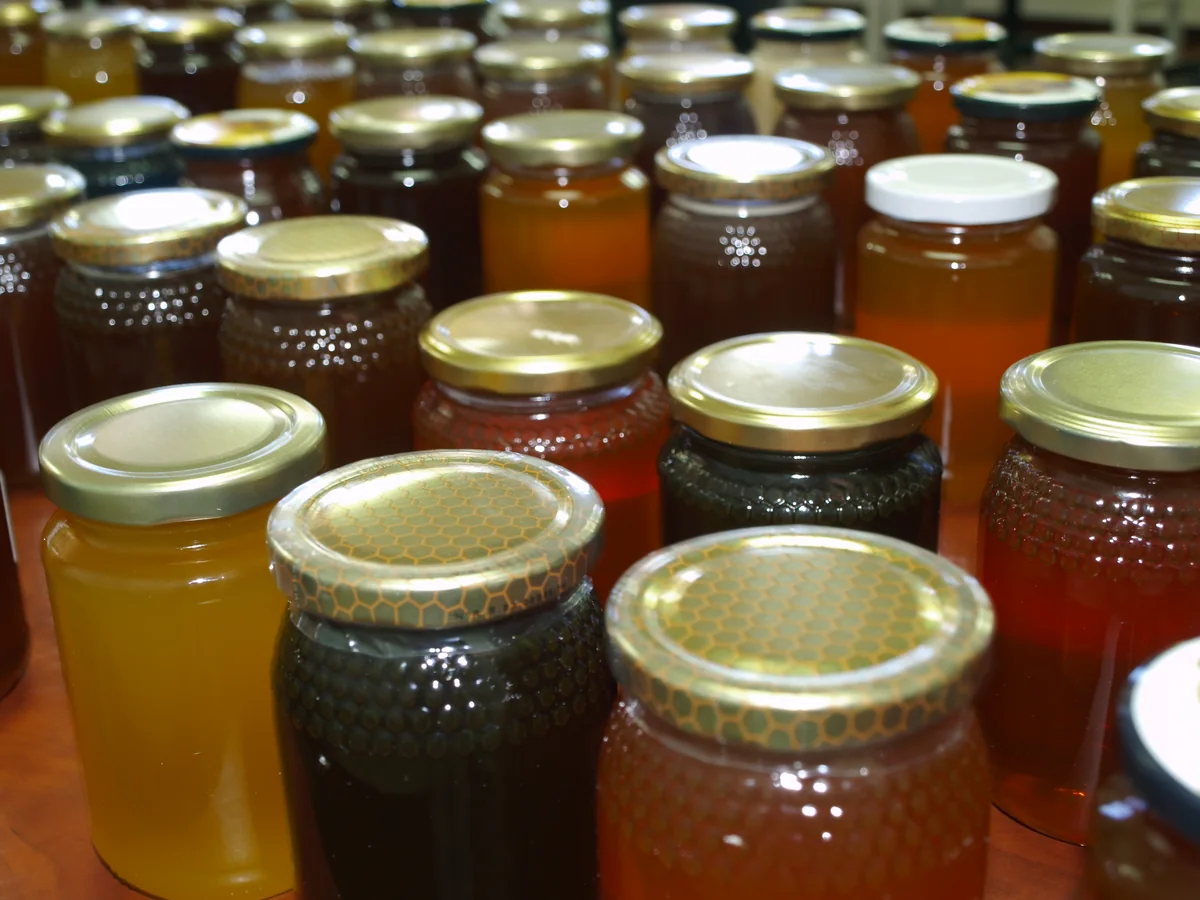
Look at the colour, clarity and surface. A honey may appear almost colourless, pale beige or dark brown. Crystallisation further changes its appearance. Colour therefore gives an interesting first clue, but not a reliable identification of the honey type. Even a side-by-side comparison initially describes only the particular jars before you; every harvest has its own history.
Smell the sample before the first spoonful. Which impression arrives first? Perhaps floral, spicy, malty or waxy. Such terms also appear in LWG’s descriptions. It is better to write down one or two clear perceptions than to assemble as many words as possible. A comparison of your own, such as “reminds me of dried hay”, may be more apt than a learnt technical expression.
More than sweetness happens on the tongue
Let a small portion spread slowly in your mouth. What do you notice first, and what remains after swallowing? Alongside sweetness, there may be bitter or fruit-like impressions, for example. Also describe how strongly you perceive something and how long it lasts. “Mild” and “intense” describe strength, not yet a personal ranking.
Notice separately how the honey feels: flowing, thick, creamy or distinctly grainy. Professional honey assessment treats consistency, smell and taste among its separate criteria. This distinction is useful for our small tasting. You may enjoy a honey’s aroma while finding its coarse crystalline texture unfamiliar. These observations can stand alongside one another.
Crystals tell a story of sugar composition
Honey becoming firm does not in itself mean spoilage. Many honeys crystallise naturally. How quickly this happens depends on factors including the sugars present, water content, existing crystallisation nuclei and temperature. Glucose plays a particular role. Some honeys stay liquid for a long time; others change consistency relatively quickly.
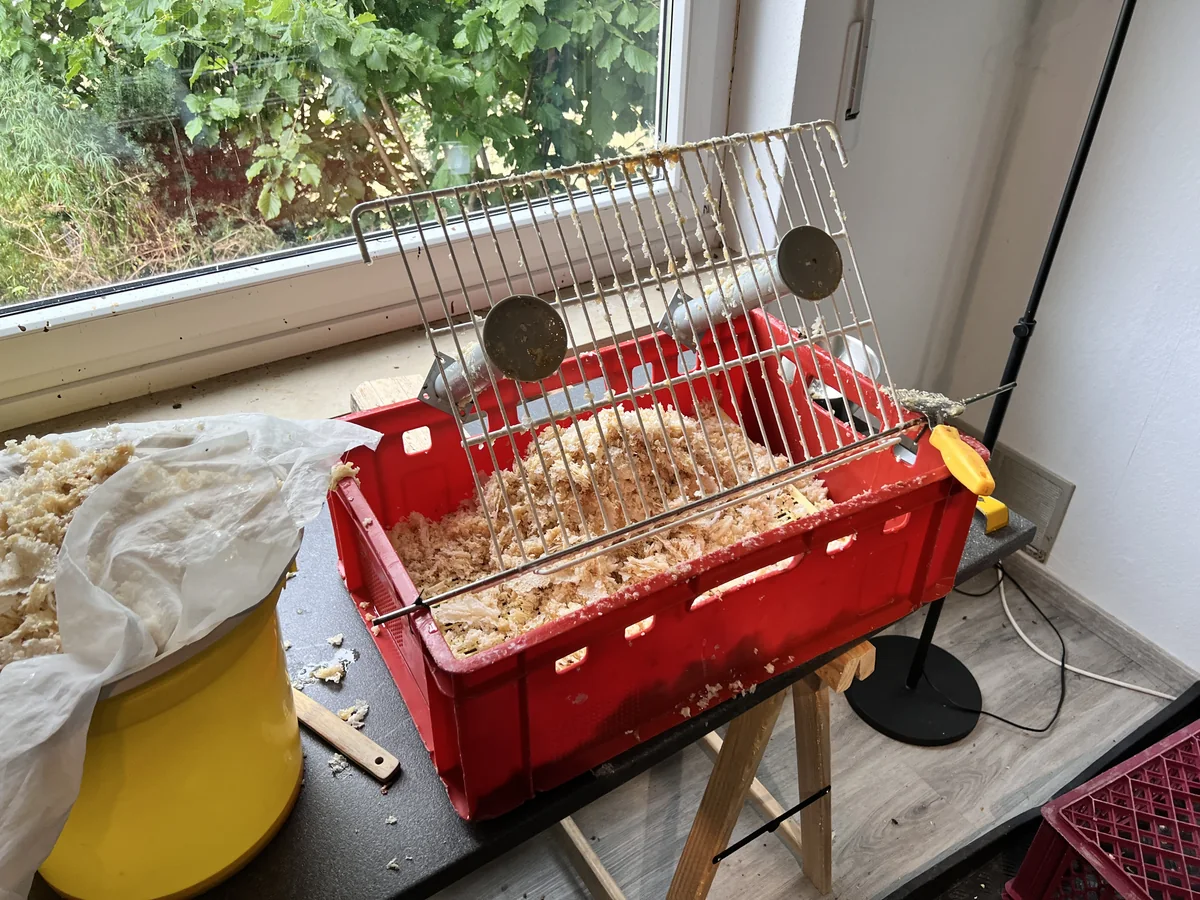
Skilful stirring during crystallisation can achieve a fine, spreadable texture. Creamed honey results from handling the crystals; its consistency requires no added cream. Compare textures as you taste too. Fine crystals may be barely perceptible, while larger ones are distinctly felt on the tongue. These differences explain much of what we broadly call “creamy” or “firm” in everyday life.
An aroma gives a clue to origin
Botanical origin shapes characteristic properties of honey. LAVES describes black locust honey, for example, as mild and faintly floral, while lime honey has a pronounced, often menthol-like aroma. Such descriptions are points of reference. They draw attention to possible impressions but do not oblige anyone to find exactly the same nuances in every jar.
For reliable assessment of honey type, sensory impressions are combined with further tests, such as pollen analysis and physicochemical characteristics. A successful tasting therefore does not become proof of origin. Your personal preference, however, needs no laboratory confirmation. Perhaps you particularly enjoy a mild honey at breakfast, while a stronger one surprises you in a deliberate tasting. Both can change with experience.
Comparison is at its best in conversation
If tasting together, each person can first note their impressions independently. Only then do you exchange descriptions. “It tastes different” becomes an interesting question: different in scent, intensity, finish or mouthfeel? There is no reason to be embarrassed by an unusual comparison. Our memories differ, and the words for them need time to develop too.
If you would like to compare our honeys directly, you can visit us at the Christmas market at the Waldorf school in Kassel: we offer a tasting of all our varieties there. Tasting together connects the jar with the people and the beekeeping behind it. Perhaps you will leave with a new favourite variety. Or perhaps simply a more attentive approach to your next spoonful. Either is a lovely beginning.
Sources & further reading
- LWG Bayern: Sensorik von Honig (PDF)Separate descriptions of appearance, smell, taste and texture; examples of sensory terms.
- LWG Bayern: Neue Honigprüfer ausgebildetInsight into professional assessment, with separate criteria for consistency, smell and taste.
- LAVES, Institut für Bienenkunde Celle: Honig-Kristallisation (PDF)Sugar composition, temperature and crystal formation; a fine texture through skilful stirring.
- LAVES: Was ist ein Sortenhonig?Typical aroma characteristics and the combination of sensory assessment, pollen analysis and physicochemical characteristics when assessing origin.
- Bundesinformationszentrum Landwirtschaft: Honig – Was bedeuten die Angaben auf dem Etikett?Consumer information on the diversity of honeys and natural crystallisation as an ordinary characteristic.