

Winter begins before the first frost
A colony cannot wait for the landscape to turn white before forming its winter workforce. In late summer and autumn, workers develop whose bodies are equipped for a longer life. Beekeepers call them winter bees. While a busy summer worker often lives for only a few weeks, these bees can survive several months. Their task extends into a spring they have never seen.
They are female workers of the same species, not a special winter breed. Season, supplies and tasks within the colony influence their development. Winter success therefore also depends on the life histories of these individual bees. The cold night is only part of the test; the community’s condition as it enters that night matters just as much.
Reserves are held inside bees too
Mention stores and filled combs first come to mind. But winter bees also carry reserves in their own bodies. Their fat body is an important metabolic organ that does much more than store fat. The winter physiological profile includes differences in proteins, fats and the storage protein vitellogenin. A year-long study found these traits more pronounced in long-lived winter bees than in summer bees.
Such findings explain a biological relationship, but provide no single measurement from which a colony’s future can be read. Longevity arises from several interacting processes. In spring, many of these old workers must rear brood again. They carry not only themselves through the dark months but also the first steps of the next generation.
Many bodies form a winter cluster
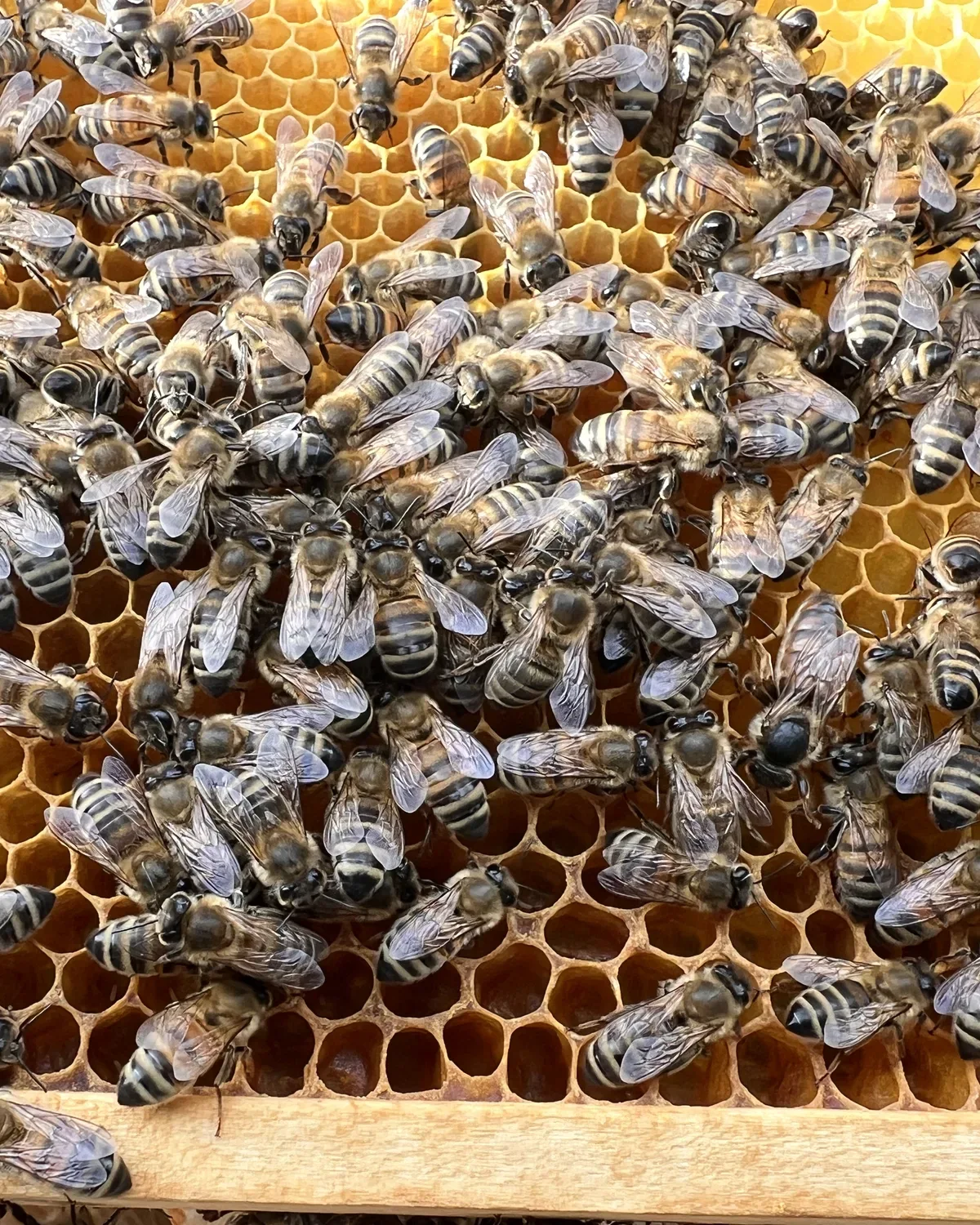
As temperatures fall, bees draw together on and between the combs. The winter cluster forms: a spatial community extending across several spaces between combs. Bees are packed more tightly on the outside; the interior stays warmer. When it gets colder, the cluster can contract more closely. In milder surroundings, it loosens again. Its shape and extent respond to conditions.
The image of a rigid ball is therefore misleading. The cluster is a living structure with different temperatures and scope for movement. Nor is the whole hive interior heated like a human living room. The bees primarily maintain viable conditions in the area they occupy. Beyond this small island of warmth, the air can remain considerably cooler. This spatial limit is precisely what makes overwintering on finite stores possible.
The heater is in the thorax
Warmth comes from metabolism and active muscle work. Workers can use their flight muscles without taking off. What moves wings in summer now helps generate heat. Thermal-camera studies show how differently individual bees respond to cold stimuli and how their combined contributions regulate nest temperature. This work requires energy from sugary food.
No queen issues heating orders. Many individual responses to the immediate surroundings collectively produce regulation. With brood present, especially narrow temperature limits matter; a broodless winter cluster need not maintain the same warmth everywhere as a brood nest. A single temperature without its measurement location and brood status therefore tells us little. The essential feature is the interaction of heat production, close packing and the nest’s protection.
Food must remain within reach
In winter, usually no substantial new stores arrive from outside. The colony lives on what lies in the combs. In managed colonies, beekeepers are responsible for ensuring sufficient suitable winter feed after the honey harvest. Quantity alone tells only half the story, however. Bees must also be able to reach the food from their current position.
The Celle Bee Institute has drawn attention to cases in which colonies starved during sustained cold despite food remaining elsewhere in the hive. They cannot cross large, cold gaps at will. As stores are consumed, the bees’ position gradually shifts. The closeness of food and the warm community is therefore an essential feature of the winter home. A full room offers little help if the journey to it becomes too far.
Spring may already be beginning inside
Winter does not mean a brood pause of the same length everywhere. Depending on conditions, brood rearing resumes earlier or later. Workers must now safeguard the development of vulnerable brood and provide its food. This increases the effort at a time when cold days and scarce flowers may still lie ahead outside. A mild spell can therefore set the colony in motion without winter being over.
A study of colonies in climate chambers examined temperature and day length separately. Higher ambient temperatures encouraged the onset of brood rearing; the influence of the light regime depended on temperature conditions. Time-dependent internal factors apparently contributed too. This does not establish a calendar date for every apiary. It shows how several signals interact and why starting too early can place demands on available energy reserves.
A long life needs healthy winter bees
Cold is not the only challenge. Parasites and diseases can shorten workers’ lives. In a Swiss study, higher burdens of Varroa mites and deformed wing virus were associated with shorter winter-bee lifespans. If bees are continually lost faster than the colony can replace them, the community shrinks and its collective performance weakens.
A view of winter therefore connects nutrition, colony development and bee health. For expert care, the condition before the cold season is as important as later checks. For visitors, this explains why a living colony is more than a queen in a wooden shell. Its future depends on many workers staying healthy enough to make the transition.
Understanding something at the quiet entrance
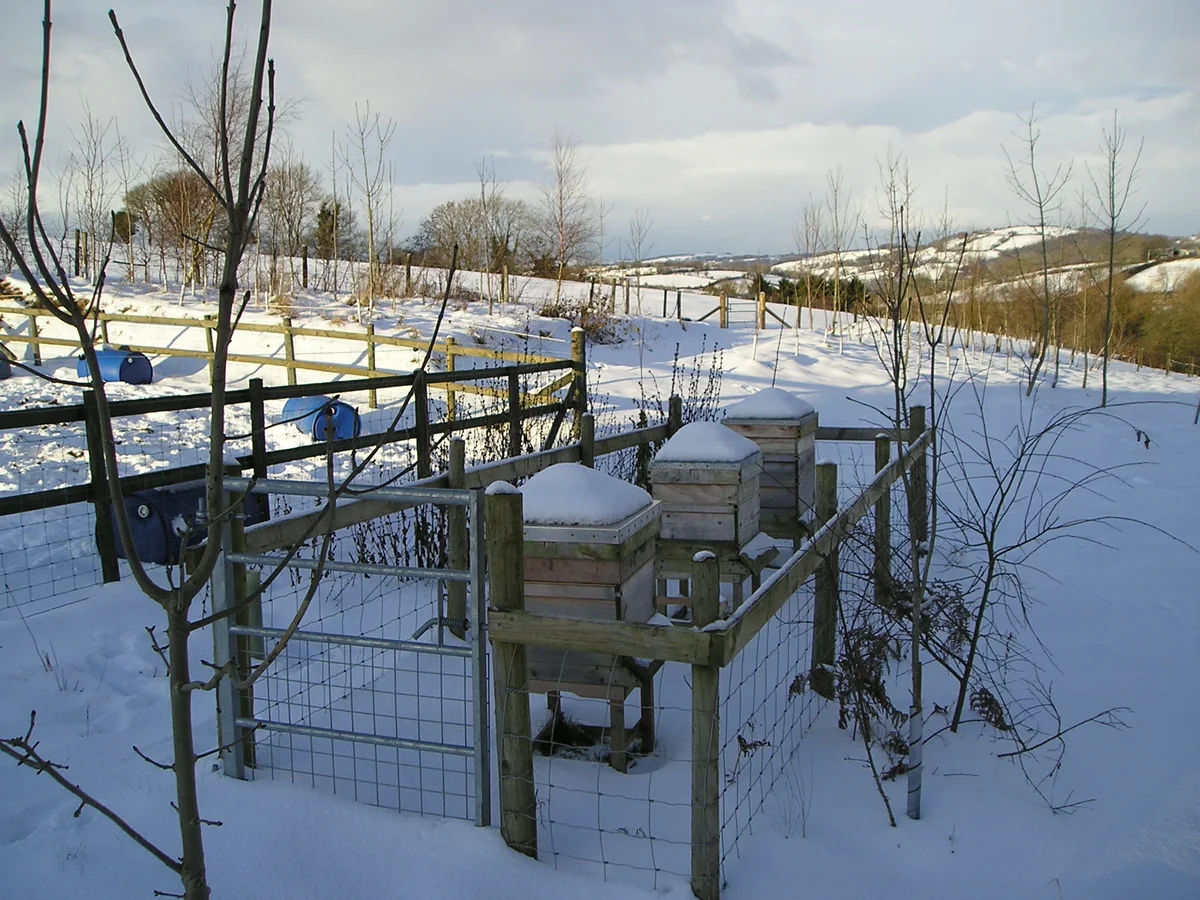
A winter visit to the apiary needs no opened lid. From a distance, you can observe how strongly the entrance responds to weather and time of day. Sometimes it remains quiet for a long while; on a suitable milder day, bees appear again. A single observation cannot reliably diagnose the entire colony. Particularly in winter, much of what matters lies beyond our view.
Knowing about the winter cluster changes how we see this stillness. Behind the wall, food is being turned into heat, an ageing bee’s body is sustaining another day, and somewhere the first new brood may already be beginning. The colony is doing more than waiting for spring. It is working to reach it. Many small lives form a connection between the last autumn flower and the first suitable flying day of the new year.
Sources & further reading
- Penn State Extension: Honey Bee Management Throughout the SeasonsThe colony’s annual cycle, winter bees, the winter cluster and movement towards stores.
- Kunc et al. (2019): The Year of the Honey Bee with Respect to Its Physiology and ImmunityYear-long study of proteins, lipids and vitellogenin in honey bee physiology.
- Stabentheiner, Kovac & Brodschneider (2010): Honeybee Colony ThermoregulationHeat production with flight muscles and temperature regulation in colonies with brood.
- LAVES, Institut für Bienenkunde Celle: Bienen droht der HungertodThe relationship between the bees’ position, accessible stores and starvation risk.
- Nürnberger, Härtel & Steffan-Dewenter (2018): Temperature, photoperiod and brood onsetClimate-chamber experiment on the interaction of temperature, day length and the onset of brood rearing.
- Dainat et al. (2012): Varroa destructor and deformed wing virus reduce the life span of winter honeybeesMonitoring winter colonies in Switzerland: the relationship between Varroa, deformed wing virus and winter-bee lifespan.
- Stabentheiner et al. (2003): Endothermic heat production in honeybee winter clusters (PDF)Study of broodless winter clusters: active heat production inside and insulation by the outer bees.