
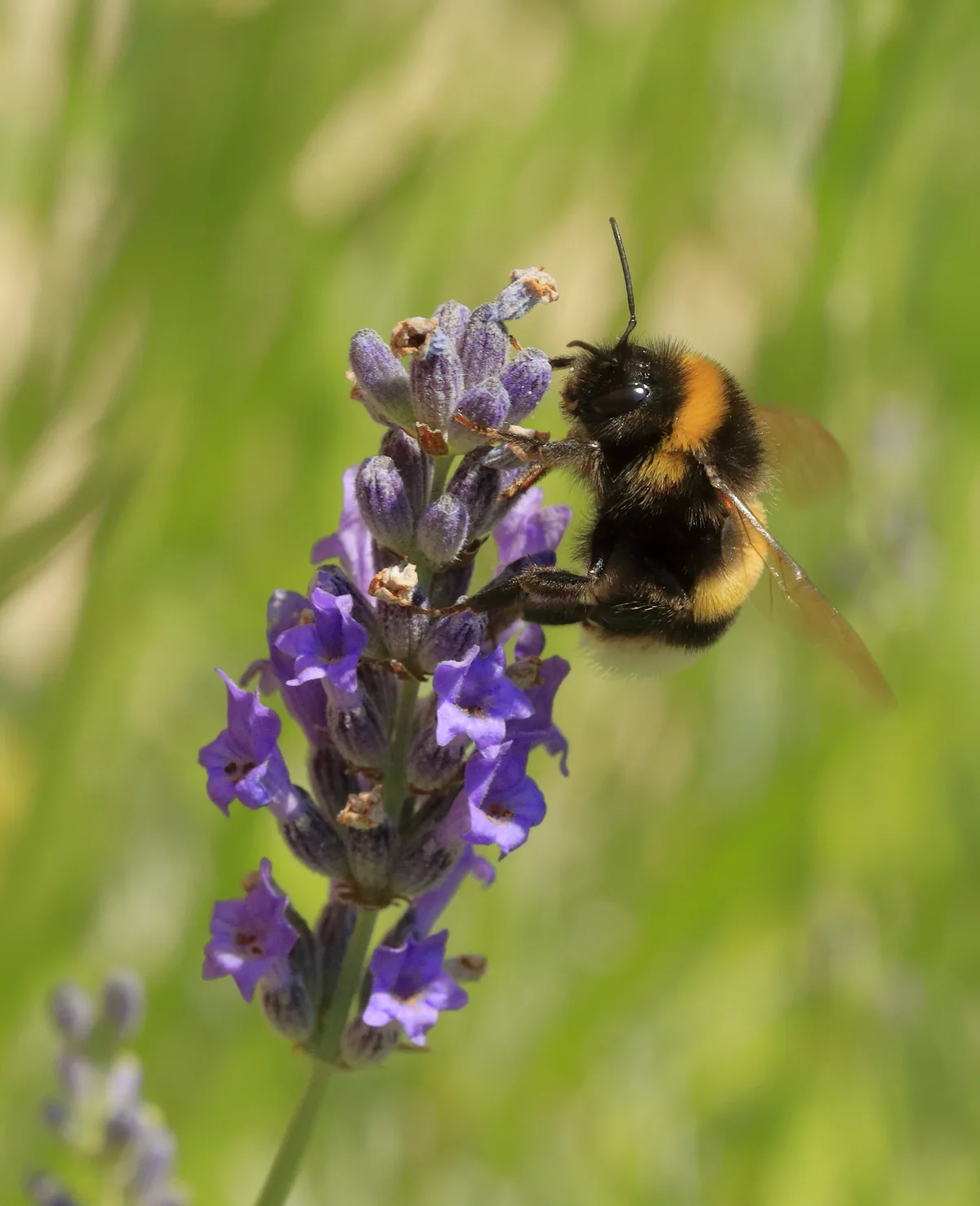

An amusing name for an invisible trace
“Smelly feet” suggests an odour we would rather keep away from. With bumblebees, the expression evokes the popular image of chemical traces on their feet. The University of Bristol used “smelly feet” when presenting research in 2017 on distinguishing these footprints. The expression opens the door to a surprising ability. It is not evidence that bumblebee feet smell of cheese to humans.
For the animals, a different question matters: what information lies on a surface? A flower may offer food while also carrying traces of previous visitors. Both are part of the environment for a searching bumblebee. Our eyes take in colour, shape and movement. Some of what influences the bumblebee’s decision remains beyond our perception. That alone makes her brief hesitation worth taking seriously.
What remains after a footstep
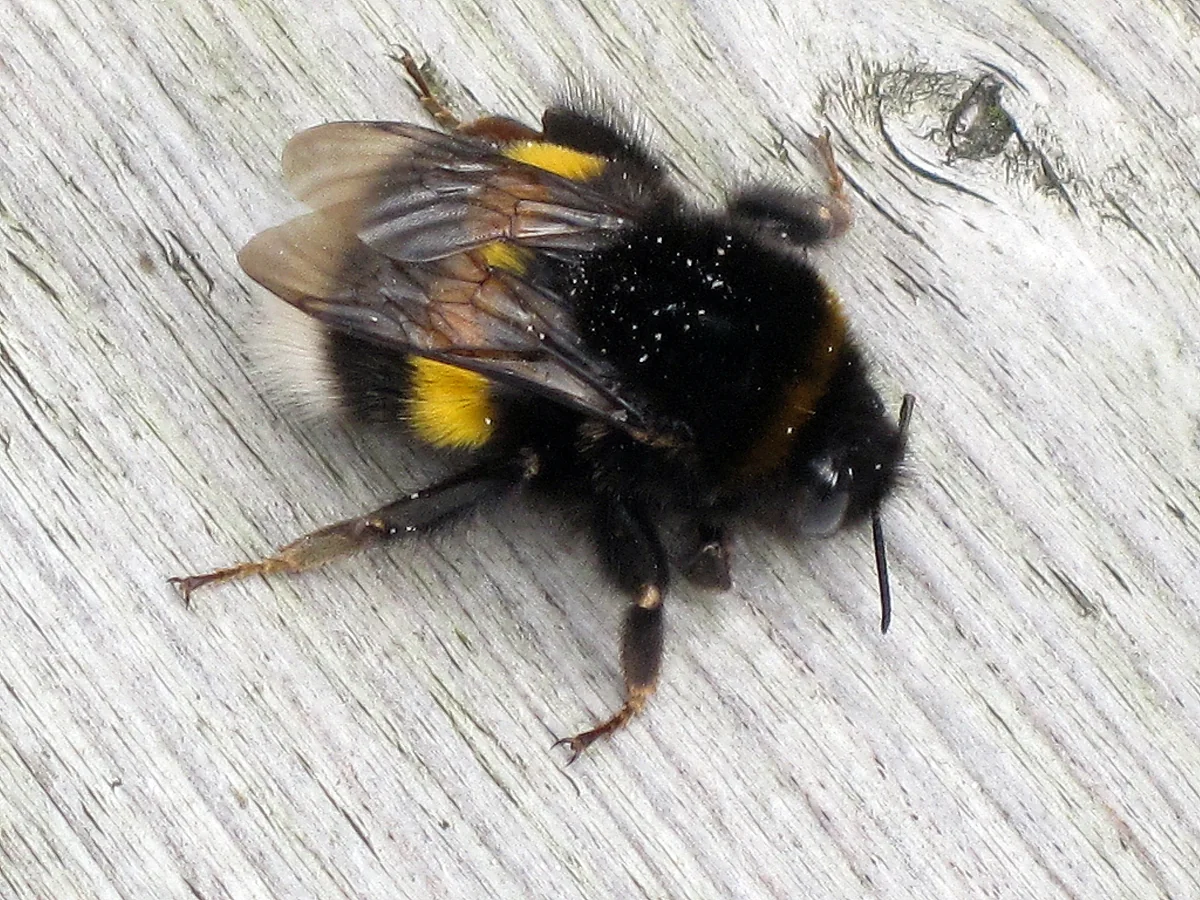
The final segments of the legs, the tarsi, carry mixtures of substances including long-chain hydrocarbons. When the animal touches a surface, minute amounts can remain behind. Experiments on chemical composition have examined such mixtures on bumblebee feet and connected them with foraging animals’ responses. These traces belong to a world in which touch can leave chemical information too.
A footprint needs neither a visible indentation nor a powerful smell in the air. Its tiny quantity makes it inconspicuous to us. Yet contact with a visited surface can make a difference to a bumblebee. The word “scent” should therefore not lead us to imagine that every animal detects a hovering cloud above a flower from far away. Proximity, landing and inspection of the surface also matter.
_queen,_Arnhem,_the_Netherlands.jpg)
A flower keeps something of its visit
The marks are more than an effect of artificial feeding stations. Thomas Eltz studied them on real spotted dead-nettle flowers visited by common carder bumblebees. Chemical analyses detected bumblebee material on the flowers. The quantity of certain substances left behind was associated with the number of visits. A flower’s surface can therefore carry a chemical history of its visitors.
An earlier visit is relevant when foraging because another bumblebee may already have taken nectar. The mark does not, however, provide a complete inventory of the flower’s interior. How much food remains or has since been replenished depends on further circumstances. The footprint is a clue to what has happened at the flower. The searching bumblebee must connect it with her experience. For us, this relationship suddenly makes a familiar meadow richer in information.
Her own feet, familiar feet, unfamiliar feet
In 2017, Pearce, Giuggioli and Rands studied buff-tailed bumblebees on artificial flowers. In three series of experiments, they combined sugar water or water with different footprints: the animal’s own marks versus unvisited surfaces, her own versus those of nestmates, and nestmates’ marks versus those of animals from other colonies. The bees repeatedly had opportunities to associate a mark with rewarding or unrewarding food.
The bumblebees could distinguish these conditions and change their visiting behaviour accordingly. When both flower types carried marks, discrimination was harder. The study thus demonstrated a remarkable learning ability under controlled conditions. It proved neither human-like recognition of individual persons nor an innate preference for every familiar footprint. The association between a distinguishable mark and the food available was an essential part of the experiment.
A message nobody needs to write
A trace can help another animal without having been deposited specifically to inform it. This distinction matters in behavioural biology. A signal evolved specifically for communication and an incidental cue can both influence behaviour. It does not follow that they arose in the same way or have the same function.
Wilms and Eltz compared footprints left by bumblebees in different places. Their results supported the explanation that foraging bumblebees use general chemical footprints rather than marking every emptied flower with a special warning message. The image of a sign reading “Already empty!” is therefore too simple. Information arises from the trace, the location and the receiver’s experience. A flower does not become unattractive simply because a bumblebee stood on it at some point.
At the entrance, the last short stretch matters
Chemical traces can play a part at the nest too. A 2023 study examined buff-tailed bumblebees in an experimental setting where learnt visual landmarks indicated different possible nest entrances. Scent marks near an apparent entrance influenced where the animals searched. The researchers could thus show how additional chemical information can help in a visually ambiguous situation.
Proximity matters when interpreting this: the study primarily describes searching on the ground and close to the entrance. It does not establish a scent trail that a bumblebee follows for kilometres through the landscape. Instead, the example complements her other abilities. Visual cues can bring her to the right area; on the last short stretches, a familiar chemical environment can provide additional guidance. What seems to us a simple opening is embedded for a bumblebee in several worlds of perception.
Look more closely at the next flower visit
Watch several visits to the same plant. Which flowers are approached, and which are checked only briefly? Where does the bumblebee land, and when does she extend her proboscis? One aborted visit does not reveal its cause. The flower might be awkwardly shaped, offer little food or carry other cues. This openness is precisely what makes observation interesting: only the pattern of several visits opens up new questions.
You do not need to make the delicate traces visible or recreate them with homemade scent mixtures. Quiet observation leaves plant and animal in their context. Knowing about chemical footprints already changes the way we look. Where a moment ago there seemed to be the same flower, there may now be new information. The bumblebee flies on. Something of her visit remains, and it may help shape the next decision.
Sources & further reading
- University of Bristol (2017): Bumblebees’ smelly feet help determine where to find lunchContext for the popular expression and presentation of the associated research.
- Goulson et al. (2000): Identity and function of scent marks deposited by foraging bumblebeesPrimary study of mixtures on the tarsi and their effects during foraging.
- Eltz (2006): Tracing pollinator footprints on natural flowersChemical detection of common carder bumblebee footprints on real dead-nettle flowers.
- Pearce, Giuggioli & Rands (2017): Bumblebees can discriminate between scent-marks deposited by conspecificsControlled learning experiments with the bees’ own marks, nestmates and animals from other colonies.
- Wilms & Eltz (2008): Foraging scent marks of bumblebees: footprint cues rather than pheromone signalsDistinction between incidental chemical cues and specialised marking signals.
- Nest-associated scent marks help bumblebees localizing their nest in visually ambiguous situations (2023)Experiments on scent marks as a short-range aid when visual navigational cues conflict.